



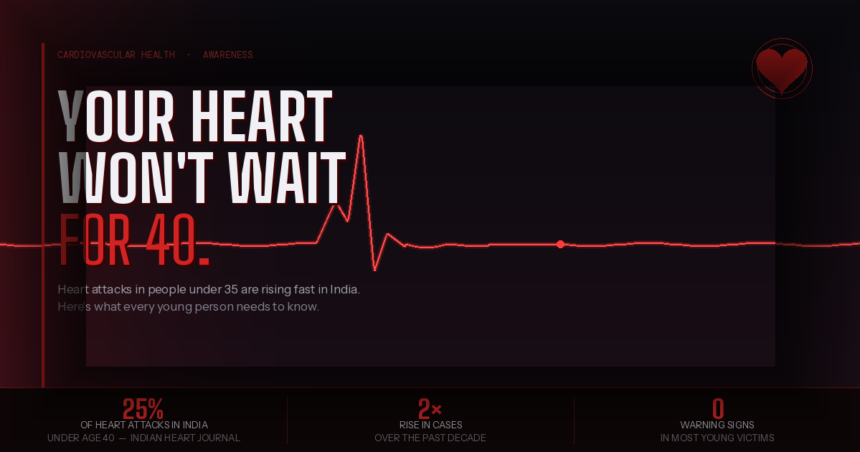
He Was 28. He Had No Warning. Then His Heart Stopped.
Arjun Mehta was at the gym the same gym he’d been going to for three years. He was fit, non-smoker, didn’t drink. At 28, he thought heart disease was something his grandfather worried about. He collapsed between sets. By the time the ambulance arrived, he was gone.
His story isn’t rare anymore. It’s becoming the new normal.
India’s Silent Emergency “Young Hearts Are Failing”
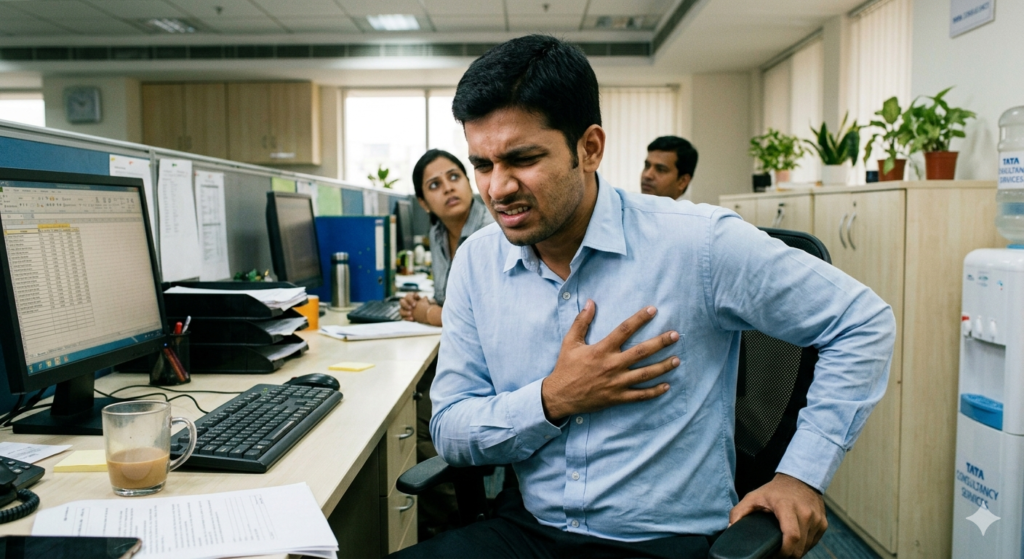
Something alarming is happening in hospitals across India, and it isn’t making enough headlines. Cardiologists at AIIMS Delhi and Fortis hospitals are reporting a dramatic rise in heart attack cases among patients under 35. These aren’t people with decades of bad habits. Many are gym-goers, working professionals, and college students.
Here’s the truth: heart attacks in young Indians have nearly doubled in the last decade.
According to a 2023 study published in the Indian Heart Journal, approximately 25% of all heart attack patients in India are now below the age of 40. That number was under 15% just ten years ago. The ICMR has flagged this trend as a public health concern requiring urgent national attention.
Globally, the WHO reports that cardiovascular disease remains the leading cause of death worldwide — but the demographic is shifting younger, faster than any model predicted.
What Doctors Are Now Seeing Is Shocking
“I used to see maybe one or two patients under 35 with a serious cardiac event in a year,” said Dr. Neeraj Bhalla, a senior cardiologist at BLK-Max Hospital, New Delhi, in a recent interview. “Now I see that many in a month.”
What’s driving this? It’s not one thing. It’s a collision of factors that India’s urban generation has normalized without realizing the damage being done.
The main culprits, according to cardiologists and researchers:
- Chronic stress — high-pressure jobs, startup culture, 12-hour workdays
- Sleep deprivation — studies show under 6 hours of sleep raises heart attack risk by 20% (Harvard Medical School, 2022)
- Obesity and metabolic syndrome — India now has over 135 million obese adults (Lancet, 2023)
- Smoking and vaping — especially among 18–30 year olds; nicotine causes artery inflammation
- Sedentary lifestyle masked by occasional exercise — sitting 10+ hours a day, then hitting the gym once, isn’t protection
- Undiagnosed hypertension — called the “silent killer” because it has no obvious symptoms
- Genetic predisposition — South Asians have a biologically higher risk of coronary artery disease compared to other ethnicities, even at lower BMI
But there’s a problem. Most young people don’t get screened. They feel invincible.
The Gym Paradox
Here’s something nobody tells you. Intense exercise without cardiovascular screening can actually trigger a cardiac event in someone with an undetected condition.
A 2022 study in the Journal of the American College of Cardiology found that sudden cardiac arrest during vigorous exercise was more common in individuals with pre-existing but undiagnosed conditions like Hypertrophic Cardiomyopathy (HCM) a thickening of the heart muscle that has zero symptoms until the heart is under extreme stress.
Most young Indians who hit the gym have never had an ECG. Never had their lipid profile checked. Never measured their resting heart rate or blood pressure over time.
They look healthy. They feel healthy. But inside, something is already wrong.
The Symptoms Most People Ignore
This is what makes it deadly. Young people dismiss the early signs because they don’t match the movie version of a heart attack the crushing chest pain, the arm dropping. In reality, early warning signs are subtle, easy to brush off.
Do not ignore these:
- Chest discomfort or pressure that comes and goes, even mildly
- Unexplained breathlessness during normal activity
- Palpitations heart racing or skipping beats without reason
- Dizziness or lightheadedness during exercise
- Excessive fatigue that doesn’t go away with rest
- Pain that radiates to the jaw, neck, shoulder, or back
Most people assume it’s acidity. Or stress. Or a bad gym session. Doctors say that delay in seeking care is one of the biggest reasons young patients don’t survive.
What You Can and Must Do
Most cardiology organizations agree: if you’re above 25, working a high-stress job, have a family history of heart disease, smoke, or are overweight you need a cardiac screening. Not at 40. Now.
Here’s a practical checklist:
- Get a basic cardiac screening — lipid profile, blood pressure, ECG, blood sugar. Costs under ₹1,500 at most labs.
- Know your numbers — ideal BP is 120/80, LDL cholesterol under 100 mg/dL
- Sleep 7–8 hours — it isn’t laziness, it’s cardiac maintenance
- Manage stress actively — therapy, boundaries at work, digital detox. These are not luxuries.
- Don’t smoke. Don’t vape. There is no safe version.
- Eat less ultra-processed food — the Indian packaged food industry has exploded, and so has the sodium and trans fat in everyday diets
- Talk to your doctor before starting intense training — especially if you’ve been sedentary for years
The Generation That Can’t Afford to Wait
India is losing young professionals, parents, children not to accidents, not to infections, but to a disease we’ve been told is “for old people.” It isn’t anymore. The question isn’t whether you’ll have a cardiac event someday. The question is whether you’ll know about the risk before it happens or after.
Arjun didn’t get a warning. You might still have time for one.
