



Imagine a healthcare system where the hospital bed is no longer a fixed piece of furniture in a crowded ward, but your own mattress at home. For millions of people across South Africa and the wider continent, accessing high-quality hospital care is a logistical and financial nightmare. General wards are frequently stretched to their limits, healthcare costs are skyrocketing, and the emotional toll of being separated from family during recovery can actively hinder healing.
A quiet revolution is taking place in African healthcare by decoupling acute care from the physical constraints of traditional brick-and-mortar hospitals. Through a blend of cutting-edge technology, clinical expertise, and a deep understanding of patient psychology, healthcare is shifting from institutional spaces back into the home. This approach is not just a temporary fix for a strained system; it is a fundamental rethinking of how medical treatment should be delivered in the modern era. By transforming the living room into a fully monitored clinical environment, this movement is making healthcare more accessible, affordable, and deeply humane.
The Crisis Facing Traditional Healthcare
The traditional hospital model is facing a severe sustainability crisis worldwide, but the fractures are particularly visible in South Africa. The healthcare ecosystem is deeply divided and heavily strained. On one side, the public sector serves the vast majority of the population but battles severe resource constraints, long waiting lists, and infrastructure deficits. On the other side, the private healthcare sector offers world-class clinical services but at a price point that is becoming increasingly unsustainable for medical schemes and ordinary citizens alike.
One of the primary drivers of these inflating costs is hospital infrastructure. Building, maintaining, and operating a physical hospital is an incredibly capital-intensive endeavor. Every brick, mortar, and specialized ward requires immense overhead, which is ultimately passed down to the patient and medical insurers. Furthermore, traditional hospital stays come with inherent, non-clinical risks. Prolonged hospitalization exposes vulnerable individuals to healthcare-associated infections (HAIs), which can complicate recovery and extend lengths of stay.
There is also a profound human cost to the traditional model. The sterile, rigid environment of a hospital ward often induces anxiety and isolation. Patients are separated from their familiar comforts, dietary preferences, and the continuous support of their loved ones. For elderly patients or those managing complex, long-term illnesses, this disruption can lead to hospital-induced delirium and emotional distress. The industry has long needed an alternative that preserves the clinical safety and rigor of an acute hospital ward while removing the physical and financial burdens of institutional infrastructure.
Introducing Dr. Vuyane Mhlomi
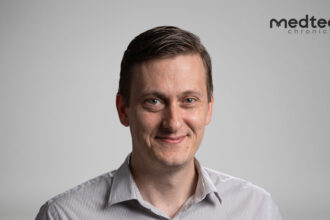
At the forefront of addressing this complex challenge is Dr. Vuyane Mhlomi, an accomplished medical doctor, academic, and entrepreneur. Dr. Mhlomi serves as the Co-Founder and CEO of Quro Medical, a South African digital health company that has pioneered the “Hospital-at-Home” concept on the continent. His academic credentials reflect a rare intersection of clinical mastery, advanced research, and strategic business acumen.
Dr. Mhlomi completed his medical degree (MBChB) at the University of Cape Town (UCT), where his academic excellence earned him first-class honors and distinctions in preclinical, clinical, and final clinical examinations. His exceptional track record earned him the prestigious Rhodes Scholarship. This opportunity took him to the University of Oxford, where he earned a Doctor of Philosophy (DPhil) in Medical Sciences, focusing his research on complex obstetric medicine.
Recognizing that clinical knowledge alone is insufficient to disrupt systemic healthcare challenges, he subsequently secured the prestigious Pershing Square Scholarship to complete a Master of Business Administration (MBA) at Oxford’s Saïd Business School. This diverse educational foundation equipped him with the precise tools needed to bridge the gap between complex medical science and scalable corporate strategy.
A Vision Shaped by Personal Experience
Dr. Mhlomi’s commitment to transforming healthcare is not purely academic or professional; it is rooted in his childhood experiences growing up in Khayelitsha, a large, resource-constrained township in Cape Town. Raised by a single mother, he witnessed firsthand the immense difficulties ordinary South Africans face when attempting to access decent medical care. His father suffered from poorly controlled diabetes and spent hours waiting in lines to see doctors before sadly passing away when Vuyane was just 11 years old. Later, on the eve of his matric exams, his mother suffered a stroke. Fortunately, early intervention within the public healthcare system saved her life.
These early observations fueled a deep sense of purpose. He entered the medical profession determined to build a system where people would not have to lose parents at a young age to manageable complications. During his time practicing in South African public hospitals, the systemic bottlenecks became even more apparent to him. He routinely saw patients sleeping on benches because wards were entirely full, while others were discharged prematurely to clear beds for critical emergencies.
These experiences convinced Dr. Mhlomi that building more physical hospitals would never be fast enough or cost-effective enough to solve the access crisis. True equity in healthcare required a complete paradigm shift. It required leveraging modern digital tools to democratize access to premium medical services, ensuring that a patient’s socio-economic background or geographic location did not determine their chances of survival and recovery.
Engineering the Virtual Hospital
In 2018, alongside co-founder Zikho Pali, an accomplished attorney and Harvard Law graduate, Dr. Mhlomi launched Quro Medical to turn this vision of decentralized care into a functional reality. By 2020, the company officially rolled out its sophisticated Hospital-at-Home program, which allows patients who would traditionally require admission to a physical hospital ward to receive equivalent, high-acuity care in their own homes.
“We are not just offering home nursing or telehealth visits; we are operating a digitally managed, legally compliant, and clinically rigorous virtual hospital ward.”
The operational backbone of Quro Medical relies on an advanced technological ecosystem consisting of several integrated components:
- Continuous Biosensor Monitoring: Patients are equipped with medical-grade, wireless wearable biosensors that continuously track vital signs in real time, including heart rate, respiration rate, skin temperature, and oxygen saturation.
- The Clinical Command Center: This continuous stream of biometric data is transmitted securely via an in-house developed platform to Quro’s centralized command center, which is staffed 24/7 by experienced doctors and nurses.
- Predictive Analytics: The monitoring platform establishes a baseline for each patient. If a patient’s vital signs begin to deteriorate, the system instantly alerts the command center, allowing for proactive medical interventions before a crisis occurs.
- In-Person Care Delivery: Technology is balanced with hands-on clinical care. Quro coordinates regular, in-person visits from doctors, nurses, and allied healthcare professionals directly to the patient’s home to administer intravenous medications, perform physical assessments, and provide personalized care.
Navigating Early Skepticism and Regulatory Hurdles
Launching an entirely new modality of care in a highly regulated and traditionally conservative sector like healthcare presented immense challenges. In the early stages, Dr. Mhlomi and his team faced significant skepticism from various stakeholders within the medical establishment. Many doctors were hesitant to manage acute patients remotely, questioning whether the home environment could truly match the safety and control of a traditional hospital ward.
Medical insurers and medical schemes were also cautious. Because the “Hospital-at-Home” model did not fit neatly into existing billing codes or regulatory frameworks, Quro Medical had to spend substantial time demonstrating both its clinical safety and financial viability. They had to prove that their model could actively reduce the total cost of a care episode while maintaining equal or superior patient outcomes.
The onset of the global COVID-19 pandemic served as an unexpected catalyst for the company. As physical hospitals became overwhelmed with patients, the broader healthcare industry was forced to look for alternative solutions rapidly. Quro Medical was able to step into the gap, demonstrating that its virtual ward infrastructure could safely manage complex patients outside of hospital walls. This successfully lowered the barrier of skepticism, accelerated regulatory acceptance, and validated the model on a massive scale.
Redefining Healthcare Delivery Through Data
Dr. Mhlomi’s approach to health innovation is anchored by a firm commitment to data-driven excellence and evidence-based medicine. Under his leadership, Quro Medical has continuously compiled and analyzed clinical outcomes to refine its care protocols. The data gathered from thousands of patient days has consistently demonstrated the profound advantages of the home-based acute care model.
Clinical metrics show that patients treated within Quro’s Hospital-at-Home program experience significantly lower rates of hospital-acquired infections and a marked reduction in 30-day readmission rates compared to traditional hospitalizations. Furthermore, patient satisfaction scores are extraordinarily high. Patients consistently report feeling safer, less anxious, and more empowered when recovering in their own homes surrounded by family.
| Clinical Performance Indicator | Traditional Hospital Ward | Quro Hospital-at-Home |
| Risk of Nosocomial (In-Hospital) Infection | Present / Elevated | Negligible |
| Patient Psychological Stress / Anxiety | High (Sterile Environment) | Low (Familiar Environment) |
| Mobility & Functional Recovery | Restricted (Bed-bound) | High (Natural Home Movement) |
| Family / Caregiver Integration | Restricted by Visiting Hours | Continuous Integration |
From an economic perspective, the data proves that the model reduces the overall cost of acute care episodes by up to 30% to 40%. This cost reduction is achieved by eliminating the massive overhead associated with physical real estate and hospital facilities. By passing these savings back to medical schemes and corporate clients, Quro Medical has secured reimbursement agreements with major medical aid providers, reaching the vast majority of the insured population locally.
Empathy as a Leadership Strategy
As a leader, Dr. Mhlomi rejects the rigid, top-down hierarchy that traditionally dominates the medical and corporate worlds. His leadership style is collaborative, deeply empathetic, and mission-driven. He believes that to solve complex, systemic social issues, an organization must foster an environment where diverse minds feel valued, heard, and inspired to innovate.
Having worked across multiple sectors, from frontline public clinics to the elite academic halls of Oxford, Dr. Mhlomi is uniquely adept at communicating with a wide array of stakeholders. He speaks the language of corporate investors, software engineers, clinical specialists, and ordinary township residents with equal clarity and respect. This ability to build bridges is central to Quro Medical’s internal culture.
He encourages his team to maintain a relentless focus on the patient experience. In company strategy sessions, the ultimate metric of success is never just financial growth; it is the human impact of their work. Dr. Mhlomi maintains a highly accessible presence within the company, actively mentoring younger clinicians and digital health enthusiasts who aspire to transform the African continent’s technology landscape.
Expanding the Horizon of Digital Health
Looking to the future, Dr. Mhlomi views the current success of Quro Medical as merely the first chapter in a much larger transformation. His vision extends far beyond the borders of South Africa. The company has worked aggressively to expand its operational footprint and has formed landmark strategic partnerships with healthcare leaders like Netcare to deepen the integration of virtual and physical delivery networks.
As technology continues to evolve, Dr. Mhlomi plans to integrate more advanced diagnostic tools, remote imaging capabilities, and artificial intelligence into the Quro ecosystem. This will allow the virtual ward model to safely manage an even broader array of complex medical conditions, ranging from advanced cardiac management to specialized post-surgical rehabilitation.
Ultimately, Dr. Mhlomi imagines a future where the physical hospital is reserved exclusively for intensive care units, emergency surgeries, and trauma cases. All other forms of acute, sub-acute, and chronic care will be seamlessly, safely, and comfortably delivered inside the home. Through his ongoing leadership at Quro Medical, Dr. Mhlomi is successfully proving that with the right combination of clinical excellence and technological innovation, the future of healthcare is home-grown.