

Imagine surviving the severe physical and emotional trauma of losing a limb, only to find that the missing limb continues to haunt you with agonizing, relentless pain. For nearly two million amputees living across the United States, this cruel irony is a daily reality. The physical wound heals, the stitches are removed, and a prosthesis may even be fitted, but the nervous system refuses to let go. Deep within the residual tissue, severed nerves fire erratic, chaotic distress signals to the brain. The resulting torment manifests as phantom limb pain, where an individual intensely feels burning, stabbing, or crushing sensations in a body part that no longer exists, or chronic residual limb pain at the amputation site.
For decades, the medical community has struggled to offer these individuals meaningful relief. The default solution has long been a regime of heavy pharmaceuticals, trapping patients in an agonizing cycle of chemical dependency without ever addressing the root neurological malfunction. But what if the solution wasn’t found in a pill bottle, but in a precise, high-tech neurological volume control? Today, a pioneering medical technology company named Neuros Medical is fundamentally rewriting the script for amputee care.
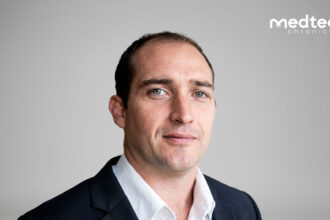
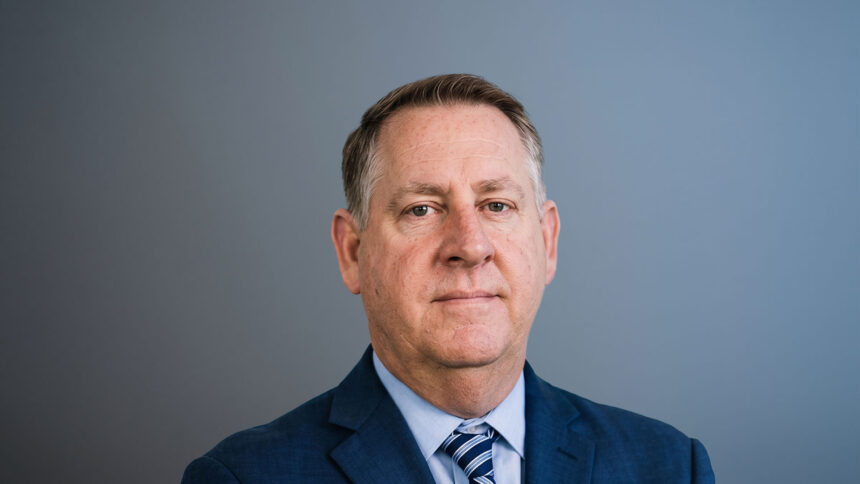
Under the visionary stewardship of its President and CEO, David Veino, the company has developed and successfully commercialized a groundbreaking, bioelectric nerve-block technology. By directly targeting the localized “angry” nerves responsible for post-amputation suffering, Neuros Medical is shifting the paradigm of chronic pain management from chemical suppression to precise, patient-controlled electrical inhibition.
The Silent Crisis of Neurological Miswiring
To fully comprehend the magnitude of Neuros Medical’s mission, one must first understand the clinical and human devastation wrought by chronic post-amputation pain. Every year, approximately 300,000 new lower-limb amputations are performed in the United States alone. While these surgeries are often lifesaving interventions necessitated by severe trauma, advanced vascular disease, or diabetic complications, they mark the beginning of a secondary, incredibly difficult medical crisis. Studies show that up to 80 percent of all amputees experience severe, chronic post-amputation pain.
When a limb is surgically removed, major peripheral nerves are inevitably severed. In a healthy healing process, these nerve endings quiet down. However, in millions of individuals, these severed nerve endings become hyper-excitable, forming hypersensitive clusters known as neuromas. These damaged nerves continuously fire high-frequency pain signals up through the spinal cord and into the brain. The central nervous system essentially becomes hyper-sensitized, a state known as central sensitization, where the brain’s pain pathways are permanently jammed in the “on” position.
Because this pain is generated by an organic, structural miswiring of the nervous system, traditional pain management strategies are notoriously ineffective. The historic standard of care has relied heavily on systemic medications: high-dose opioids, gabapentinoids, and anti-depressants. These drugs do not fix the broken nerve pathway; they merely blunt the brain’s overall perception of pain while inflicting an immense toll on the patient’s body and mind.
Patients are routinely caught in a downward spiral characterized by severe opioid addiction, profound depression, sleep deprivation, anxiety, post-traumatic stress disorder (PTSD), and alarmingly high rates of suicidality. The economic and social costs are equally staggering, as these individuals are frequently left unable to work, walk with their prosthetics, or engage in basic everyday activities. The medical ecosystem has long recognized this as an immense, unresolved clinical void, a population of patients who have been systematically overlooked and profoundly underserved.
The Executive Who Answered the Call
Addressing a medical challenge of this complexity requires a leader who possesses a rare blend of deep physiological knowledge, extensive commercial expertise, and a genuine, empathetic commitment to patient welfare. David Veino embodies this exact combination. Bringing over thirty years of seasoned executive experience within the medical device and healthcare industries, Veino has spent his career navigating the highly regulated, high-stakes world of medical innovation.
Veino’s educational foundation uniquely prepared him for this intersection of science and commerce. He earned a Bachelor of Science degree in Physiology from California State University, Chico, providing him with a rigorous, fundamental understanding of how the human body and nervous system operate. Recognizing that bringing advanced medical technologies to life also requires sophisticated corporate strategy, he later completed the prestigious Advanced Management Program at Harvard Business School.
Before joining Neuros Medical, Veino established an impressive track record of scaling healthcare organizations and expanding patient access to critical therapies. At Cardiovascular Systems, Inc. (CSI), he served in several senior executive positions, where he was instrumental in scaling the commercial organization from a $50 million enterprise to an industry powerhouse generating over $250 million in combined coronary and peripheral vascular sales. Crucially, during his tenure at CSI, Veino championed and led the successful development of amputation prevention programs. These initiatives were specifically designed to drive clinical awareness, improve vascular screenings, and expand advanced care access to historically underserved, low-income, and minority communities across the United States.
Prior to his transformative work at CSI, Veino served as a General Manager for Stryker, one of the world’s leading medical technology firms, where he led the creation and development of their specialized Interventional Spine Division. His extensive resume also includes pivotal commercial leadership roles at Globus Medical, as well as advisory and executive capacities within various venture-capital-backed medical device startups. Furthermore, Veino maintains active ties to healthcare investment networks, serving as a private equity advisor with Sectoral Asset Management.
When Veino joined Neuros Medical as Chief Operating Officer (COO) in 2018, he brought a wealth of commercialization knowledge, a deep network of industry relationships, and a sharp focus on operational excellence. His profound impact on the company’s strategic trajectory led to his appointment as President, CEO, and a member of the Board of Directors in 2023, positioning him at the helm of the company’s crucial transition from a clinical-stage research entity to a commercial market leader.
A Deep-Seated Passion for Amputation Prevention and Amputee Care
For David Veino, leading Neuros Medical is far more than a corporate milestone; it is the natural culmination of a lifelong professional crusade. Having spent decades working in the peripheral vascular and cardiovascular spaces, Veino spent a significant portion of his career fighting to prevent amputations altogether. He worked hand-in-hand with vascular surgeons and interventionalists, deploying advanced tools to restore blood flow to diseased limbs, saving legs, and preserving the mobility of countless patients.
Yet, despite the best efforts of clinicians and advanced technologies, amputations remain an unavoidable reality for hundreds of thousands of people globally due to advanced disease states or severe trauma. For years, Veino witnessed the frustrating reality that once a patient underwent an amputation, they essentially fell off the vascular care map. The medical infrastructure focused heavily on the surgical wound and prosthetic fitting, but frequently left the patient to suffer through the ensuing chronic nerve pain in relative isolation.
When Veino was introduced to the underlying technology of Neuros Medical, the alignment of purpose was immediate. He recognized that this technology represented the missing half of the continuum of care. He could now transition from a career focused on preventing amputations to a mission focused on restoring the lives of those for whom amputation was unavoidable. The undeniable excitement in Veino’s voice when discussing the company’s bioelectric platform stems from a clear realization: this technology offers a definitive, elegant alternative to the catastrophic reliance on opioids, giving a marginalized patient population a legitimate chance to reclaim their dignity and quality of life.
Turning an Academic Discovery Into a Tangible Lifeline
The technology that underpins Neuros Medical did not materialize overnight; it was born out of rigorous academic research at Case Western Reserve University in Cleveland, Ohio. Researchers at the institution discovered that applying a specific, high-frequency electrical current directly to a peripheral nerve could temporarily and safely arrest the transmission of electrical impulses along that nerve pathway. It was, in essence, an electrical on-demand nerve block.
Recognizing the immense therapeutic potential of this discovery, Neuros Medical was formed to translate this laboratory breakthrough into an implantable, medical-grade therapeutic system. The result of this intensive engineering and clinical journey is the Altius® Direct Electrical Nerve Stimulation System.
The Altius® System is a sophisticated, patient-controlled, on-demand bioelectric device engineered to disrupt pain signals before they can reach the brain. The system consists of three primary physical components. First, a proprietary, ultra-flexible smart nerve cuff electrode is surgically wrapped directly around the affected peripheral nerve near the site of the amputation. Second, a sleek, rechargeable implantable pulse generator (IPG) acts as the power unit and is placed subcutaneously, typically within the abdomen or upper buttock area. This generator is connected to the nerve cuff via a highly durable lead tunneled beneath the skin. Finally, an external handheld patient remote control allows the individual to safely interact with their implant.
The clinical application is remarkably straightforward and empowering. When a patient experiences a surge of phantom or residual limb pain, they do not need to reach for a pill bottle. Instead, they simply hold their remote control over the site of the implanted generator and press a button. This action triggers a wireless signal that initiates a pre-programmed, 30-minute treatment session. The generator delivers a proprietary high-frequency electrical current down the lead to the nerve cuff, immediately neutralizing the hyper-excitable nerve activity and effectively blocking the pain signal.
A single 30-minute session provides an average of nine consecutive hours of profound pain relief. By replacing a chemical intervention with a precise electrical signal, the Altius® System gives patients autonomous, localized control over their chronic condition without any of the systemic side effects, cognitive fog, or addictive risks associated with heavy pharmaceuticals.
Navigating a Decade-Long Gauntlet of Clinical and Regulatory Trials
Bringing a disruptive, class-III implantable medical device to market is a journey of extreme endurance. Under Veino’s leadership, Neuros Medical had to navigate a grueling, decade-long regulatory and clinical gauntlet. The path to securing Food and Drug Administration (FDA) approval via the rigorous Premarket Approval (PMA) pathway required an enormous financial investment, averaging upwards of $100 million from inception to completion, alongside unwavering operational discipline.
The cornerstone of the company’s clinical validation was the QUEST study (NCT02221934), a multi-center, randomized, double-blind, active-control, crossover clinical trial. The QUEST study represents the largest and most statistically rigorous clinical trial ever conducted to evaluate an implantable device for chronic post-amputation pain in lower-limb adult amputees. Initiated in 2014, the trial faced evolving FDA guidelines, complex patient enrollment criteria, and the inherent challenges of executing a long-term clinical trial across multiple medical institutions.
The long-term data from the QUEST study, published in prestigious medical journals such as Neuromodulation, yielded highly significant, life-altering results. Patients treated with the Altius® System experienced immediate and sustained pain reduction that persisted throughout the 12-month evaluation period. However, the benefits extended far beyond a simple reduction in pain scores:
- Sustained Pain Relief: Patients experienced an average 30% reduction in pain just 30 minutes after initiating a treatment session, which grew to a 50% reduction 120 minutes post-session.
- Dramatic Opioid Reduction: The study demonstrated a staggering 86% overall reduction in opioid consumption among participants, with an extraordinary 42% of patients completely discontinuing opioid use altogether.
- Unprecedented Quality-of-Life Metrics: Participants reported a 44% improvement in walking ability, a 51% improvement in sleep quality, and a 45% overall increase in their self-reported quality of life.
A particularly remarkable clinical phenomenon observed during the trials was “central desensitization.” Over time, as patients utilized the Altius® System to consistently block the incoming barrage of pain signals, the hypersensitive pathways within the central nervous system began to normalize. Patients found that their base level of daily pain began to steadily subside, allowing them to use the device less frequently over time. The rigorous data from the QUEST study successfully demonstrated to the FDA that the probable benefits of the system profoundly outweighed any associated procedural risks, culminating in the landmark FDA Premarket Approval on August 26, 2024.
Commercial Expansion and the Crucial Battle for Market Access
With the definitive milestone of FDA approval achieved, David Veino has pivoted the company’s focus toward the next major mountain: widespread commercialization and market access. In the medical device industry, securing regulatory approval is only half the battle; ensuring that healthcare providers can easily prescribe the technology and that insurance companies will cover the cost is where life-saving innovations succeed or fail.
A pivotal moment in this scaling phase occurred when Neuros Medical announced the successful completion of a massive $56 million Series D financing round. Led by prominent investor EQT Life Sciences and backed by a powerful syndicate of existing venture partners, including U.S. Venture Partners, Amzak Health, Osage University Partners, Aperture Venture Partners, and Sectoral Asset Management, the capital injection provided the financial foundation required to aggressively ramp up commercial operations out of their Aliso Viejo headquarters.
Under Veino’s direction, the company is deploying these resources to expand its specialized sales force, build robust clinical support teams, and educate the broader surgical and pain-management communities. A key component of Veino’s commercial strategy is establishing strategic distribution partnerships. Neuros Medical partnered with Veterans Healthcare Supply Solutions (VHSS), a prominent Service-Disabled Veteran-Owned Small Business. This strategic partnership ensures that the Altius® System can be efficiently distributed through federal government agencies, bringing this non-opioid pain relief technology directly to the nation’s military veterans, a demographic that suffers disproportionately from combat-related limb loss and chronic post-amputation pain.
Simultaneously, Veino is leading a highly sophisticated market access campaign to secure dedicated reimbursement codes from both private insurers and the Centers for Medicare & Medicaid Services (CMS). Rather than attempting to force the Altius® System into legacy reimbursement categories that do not accurately reflect its unique bioelectric mechanism, Neuros Medical is aggressively pursuing distinct, dedicated insurance coding. While navigating the bureaucratic pathways of healthcare economics can introduce near-term friction, Veino’s deep background in market access ensures the company is uniquely positioned to achieve long-term, sustainable commercial success.
Cultivating an Environment of Responsible Ambition
To understand David Veino’s effectiveness as a chief executive, one must look closely at the corporate culture he fosters within Neuros Medical. Veino operates on a leadership philosophy centered around four clearly articulated core values: Patients First, Deliver Excellence, Responsible Ambition, and Inspire & Empower.
Among these values, “Responsible Ambition” perfectly encapsulates Veino’s approach to medical innovation. In the venture-backed startup world, there is often intense pressure to rush products to market, cut corners, or prioritize rapid financial exits over methodical clinical validation. Veino has deliberately built a culture that rejects this short-sighted approach. He insists that every commercial step, marketing claim, and engineering modification be backed by unassailable, peer-reviewed clinical data.
Veino’s leadership style is highly collaborative and intensely human. He frequently emphasizes that the true value of a medical technology company isn’t measured in revenue metrics or valuation figures, but in the qualitative restoration of everyday human life, the ability of a grandfather to sleep through the night, a veteran to return to the workforce, or an amputee to walk comfortably on a prosthetic limb. By keeping the organizational focus squarely on these human outcomes, Veino inspires a deep sense of shared purpose across his engineering, clinical, and sales teams.
Furthermore, Veino is widely recognized for his selective and thoughtful approach to financial partnerships. He has openly praised regional investment partners, such as JobsOhio Ventures, noting that their long-term, patient capital and shared commitment to local economic and clinical success stand in stark contrast to traditional, short-sighted venture capital. By aligning Neuros Medical with investors who share a genuine commitment to patient care, Veino protects the company’s core mission from being compromised by near-term financial pressures.
Pioneering the Future of Bioelectric Medicine
As Neuros Medical establishes the Altius® System as the gold standard of care for lower-limb post-amputation pain, David Veino’s strategic vision stretches far beyond this initial clinical indication. The success of their Direct Electrical Nerve Stimulation platform has effectively validated a broader biological truth: that precise, localized bioelectric blocks can serve as a highly effective, non-pharmaceutical interface for treating a wide array of chronic neurological conditions.
Looking downstream, Neuros Medical is well-positioned to expand the application of its patented platform technology to address other severe, intractable pain syndromes. Potential future indications include chronic post-surgical pain, such as the persistent nerve damage that can occur following major thoracic, abdominal, or orthopedic surgeries, as well as severe peripheral neuropathies and upper-limb post-amputation pain.
Under Veino’s stewardship, Neuros Medical is evolving from a single-product medical device startup into a pioneer of the rapidly growing bioelectric medicine sector. By proving that high-frequency nerve block technology can safely dismantle chronic pain pathways, stabilize the central nervous system, and completely eliminate opioid reliance, the company is laying the groundwork for a future where electricity increasingly replaces pharmacology. For millions of individuals currently trapped in the debilitating shadows of chronic nerve pain, David Veino and the dedicated team at Neuros Medical are delivering something far more valuable than a high-tech medical device; they are delivering an enduring, profound sense of hope, and the tangible means to finally take back power over pain.