


The global healthcare sector faces a classic paradox: medical science has never been more advanced, yet navigating everyday healthcare has rarely felt more fragmented, bureaucratic, and detached from human comfort. For a typical patient, managing a single illness can require interacting with multiple disconnected entities, including primary care clinics, independent diagnostic laboratories, brick-and-mortar pharmacies, and corporate insurance companies. Each entity operates on a separate system, creating fragmented communication channels, repetitive administrative paperwork, and long wait times. This systemic friction does more than exhaust patients; it inflates operational costs, drains corporate human resource budgets, and complicates data management for insurers and clinicians alike.
In response to this administrative and clinical complexity, the healthcare industry has seen a push toward digital transformation. However, many early digital health applications simply digitized single points of friction rather than fixing the overall journey. A standalone telemedicine app, an isolated digital pharmacy delivery service, or an independent electronic health record system still forces users to act as their own medical coordinators. The true challenge lies not in building separate tools, but in building a unified infrastructure where technology serves as a reliable, invisible layer connecting every stage of the medical journey.
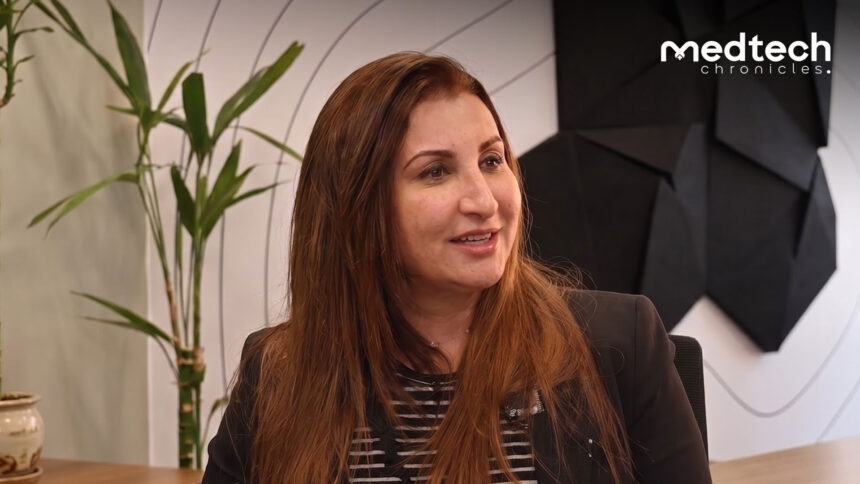
This is the system gap that Dr. Saira Siddique set out to close. As the Founder and CEO of MedIQ Solutions, she has built a single, B2B-focused digital health ecosystem designed to remove these daily frictions. By moving past standalone applications, MedIQ Solutions connects patients, clinical service providers, corporate employers, and insurance payers within a shared, compliant cloud network. Her approach treats healthcare logistics not as a collection of separate transactions, but as a continuous service. This business model shows how structural healthcare experience, clear unit economics, and purpose-built technology can turn systemic administrative friction into a smooth, accessible hybrid healthcare model.
The Cost of Disconnected Medical Logistics
To understand why a unified digital network is necessary, one must look at the structural inefficiencies that burden emerging markets and fast-growing economic regions like South Asia and the Middle East. Historically, healthcare delivery in these markets has relied heavily on point-of-care transactions. If a patient requires a routine consultation, diagnostic validation, and prescription fulfillment, they must navigate three distinct physical facilities and manage three separate payment cycles.
For corporate employers offering employee health benefits, this fragmentation creates a serious financial and operational burden. Human resource teams spend valuable hours validating separate medical claims, managing diverse clinic networks, and processing outpatient reimbursements. Without a central data platform, companies struggle to spot aggregate health trends within their workforce, missing opportunities for preventive care that could lower long-term insurance premiums.
At the same time, insurance companies face high administrative costs from manually processing paper invoices, cross-checking diagnostic reports, and managing fraud risks across thousands of independent providers. Clinicians are also affected; they are often caught between using rigid, non-intuitive documentation systems and dealing with incomplete patient medical records from outside facilities. When a doctor cannot access a patient’s full diagnostic history from an external lab, it can lead to repeated medical tests, delayed treatments, and higher costs for the patient. The core issue is clear: the healthcare system has lacked an integrated network capable of securely sharing data and coordinating in real time while respecting local health regulations.
A Leader Rooted in Medicine and Public Infrastructure
Dr. Saira Siddique did not enter the healthtech startup landscape from a purely conventional technology or venture-capital background. Instead, her career began with direct clinical training as a medical graduate from Rawalpindi Medical College in Pakistan. This initial foundation as a physician gave her firsthand exposure to the daily realities of patient care, clinical workflows, and the practical challenges faced by frontline medical staff.
Recognizing that individual patient interactions are shaped by wider health policies and macroeconomics, she expanded her focus from clinical medicine to public health systems. She earned a Master of Public Health from the London School of Hygiene & Tropical Medicine, followed by a PhD in Health Economics from the University of York in the United Kingdom. This academic combination gave her a deep understanding of health economics, financing models, resource allocation, and the structural incentives that drive healthcare ecosystems.
Before founding MedIQ Solutions, Dr. Siddique spent more than two decades managing public and private healthcare sectors, corporate healthcare strategies, and large-scale insurance programs across five countries. A key milestone in her career was serving as the founding CEO of the Punjab Health Initiative Management Company. In this public sector role, she led the implementation of the Sehat Sahulat program in the Punjab province—a major micro-health insurance initiative designed to protect low-income families from high medical costs.
Under her three-year leadership, the newly formed public entity scaled its operations to cover 3 million families, managing an annual budget of 18 billion PKR across 14 districts. This experience proved that managed healthcare systems could operate efficiently at scale when backed by clear data tracking and structured provider networks. It also showed her the limitations of relying purely on physical infrastructure to reach diverse populations, laying the conceptual groundwork for what would later become MedIQ Solutions.
Moving From Public Policy to Digital Innovation
The transition from managing large-scale public health programs to launching a private healthtech venture came from a practical realization: traditional, paper-based administrative systems face hard limits when trying to expand access and control costs for millions of people. Throughout her career in health insurance and public sector management, Dr. Siddique saw how much time and money was lost to manual verification, claims processing delays, and fragmented care. She realized that while policy reforms are important, a modern healthcare system requires an efficient, digital-first model of care to scale effectively.
Her motivation focused on a clear goal: building a digital infrastructure that functions as a single virtual care environment. She wanted to create a platform where a patient could consult a doctor, receive a verified digital prescription, schedule a home lab collection, and arrange home delivery of medications within a single, continuous workflow.
By shifting the business model to a customizable, plug-and-play B2B technology stack, she aimed to give corporations, insurance providers, and hospitals a way to offer coordinated care without requiring massive capital investments in building their own software. The goal was to replace paperwork with automated, data-driven systems, making high-quality care easier to access for a broader population.
Constructing the Plug-and-Play Care Infrastructure
When MedIQ Solutions was launched, the initial priority was building a system architecture capable of handling complex hybrid healthcare transactions seamlessly. Dr. Siddique positioned the platform not as a simple directory matching doctors with patients, but as an integrated virtual care platform. The core product is a business-to-business technology stack that allows corporate clients and insurance companies to launch custom, white-labeled health portals for their employees and policyholders within days.
The engineering of the platform focuses on three main components. First, integrated patient portals provide an interface where users can access telemedicine consultations, manage prescription orders, and coordinate medical care without leaving the corporate or insurance partner’s app ecosystem. Second, custom workflows and electronic health record systems reduce manual data entry for clinicians and speed up administrative tasks. Third, a secure health exchange engine acts as a data-routing core that connects laboratories, pharmacies, and imaging centers. It tracks transactions, collects diagnostic data, and processes payments securely while maintaining full compliance with local laws.
To support regional growth, MedIQ Solutions ensured its platform complied with major international and local healthcare standards from the start, including HIPAA and ISO certifications. This focus on regulatory compliance allowed MedIQ Solutions to shift from a local startup to a regional technology provider capable of working with large corporate clients and global insurance groups.
Scaling Breakthroughs and Capital Milestones
Building a female-led healthtech venture in South Asia presented distinct fundraising and market challenges. In the regional startup financing ecosystem, women-led companies historically received less than 3% of total venture capital. Breaking through this capital barrier required a strong focus on clear unit economics, a provable business-to-business revenue model, and a scalable technology architecture.
In early 2022, Dr. Siddique hit a major fundraising milestone by securing $1.8 million in a pre-seed funding round, making her the first solo female founder in Pakistan to raise a round of that size for a healthtech startup. The strategic investment round was co-led by regional venture capital firms and international health sector investors, including Sarmayacar and Cordoba Ventures, alongside angel investors with deep technology expertise.
Instead of spending this capital on expensive user acquisition campaigns, MedIQ Solutions used the funds to refine its enterprise technology stack and expand its B2B provider network. Within its first 18 months of operation, the platform scaled efficiently, serving more than 300,000 unique patients across its corporate and insurance contracts. This steady volume allowed the company to reach financial profitability in its initial market before launching its next stage of international growth.
Strategic Expansion Across the Corporate Marketplace
With a profitable enterprise model established, Dr. Siddique focused on expanding across the Middle East and North Africa region, with a particular emphasis on the Gulf Cooperation Council markets. MedIQ Solutions expanded its operations into the Kingdom of Saudi Arabia and the United Arab Emirates, setting up regional offices to anchor its corporate services.
This geographic expansion was timed to match large-scale national transformations, such as Saudi Vision 2030, which prioritizes digital health infrastructure and private-public partnerships to modernize national care delivery. In these Gulf markets, MedIQ Solutions modified its platform to address the distinct needs of high-premium private insurance models and private healthcare groups.
Rather than competing with large hospital groups or specialized clinics, MedIQ Solutions positioned its software as a supporting layer. The company provides partners with tools for patient experience management, remote patient monitoring, and revenue cycle management to optimize their existing operations. This collaborative approach helped MedIQ Solutions gain visibility at major regional technology events, including Web Summit Qatar, where Dr. Siddique highlighted how adaptive venture capital structures can help scale digital health technologies across emerging borders.
The Philosophy of Data-Driven Care and Human Empathy
Dr. Siddique’s approach to leadership blends structured, metrics-driven performance with a clear focus on user experience. Her guiding operational philosophy emphasizes that technology should reduce administrative burdens, not add to them. She maintains that healthcare is about people, not paperwork, and that advanced digital tools aim to remove the friction that stands between a patient and the care they need.
This principle shapes how MedIQ Solutions designs its software interfaces. The platform focuses on minimizing the number of clicks required for a corporate employee to schedule a medical consultation, order a prescription, or file an insurance claim.
In her corporate leadership, Dr. Siddique maintains an open corporate culture that balances analytical accountability with social purpose. She balances high performance expectations with professional growth opportunities for her teams, building an organization that can adapt to changing healthcare rules and tech trends. As an active mentor within the regional startup ecosystem, she regularly advises early-stage founders on navigating complex regulatory environments, maintaining capital efficiency, and proving clear enterprise value before attempting to scale.
Orchestrating the Next Era of Unified Health Tech
Looking forward, MedIQ Solutions is focused on expanding its technology footprint across the Middle East, South Asia, and North Africa. The company’s future growth strategy centers on deeper integration of artificial intelligence tools within its core clinical systems. By training secure models on anonymized health datasets, MedIQ Solutions aims to give corporate clients clearer insights into workforce health trends, helping teams implement targeted preventive care programs before serious health issues arise.
As digital health regulations evolve worldwide, MedIQ Solutions continues to update its software modules to handle automated claims processing and cross-border telemedicine standards smoothly. By keeping patient needs at the center of its product design and maintaining clean unit economics, the company is well-positioned to remain a key player in the regional shift toward hybrid, accessible healthcare. For Dr. Saira Siddique, the long-term goal remains steady: building an integrated, resilient health ecosystem where high-quality care stays accessible, sustainable, and reliable for all.