

The field of modern medicine is facing a significant, quiet crisis. Every single day, hospitals globally generate massive streams of healthcare data, ranging from complex medical imaging scans to continuous bedside heart monitor feeds. However, the sheer volume of this data has far outpaced the human capacity to review it. Overstretched medical staff, exhausted by long shifts, find themselves reviewing critical patient metrics under extreme pressure.
In high-stakes environments like intensive care units and emergency departments, minor fluctuations in a patient’s vital signs or small anomalies hidden deep within an X-ray can easily be missed. When these subtle clinical indicators go unnoticed, the consequences can be devastating, sometimes leading to unexpected cardiac arrests or delayed diagnoses of aggressive diseases.
For decades, the global healthcare infrastructure has functioned reactively, stepping in to treat illnesses only after severe symptoms manifest. The missing link has always been a reliable system capable of analyzing massive troves of clinical data in real-time, functioning as an extra, tireless eye for physicians.
Bridging the Gap Between Technology and Human Lives
This overwhelming operational burden on medical professionals highlights a structural disconnect in healthcare. Traditional medical diagnostic methods rely heavily on manual interpretation, leaving substantial room for subjective variance. Two highly trained radiologists looking at the exact same brain MRI might arrive at slightly different conclusions, particularly when trying to catch early, microscopic signs of degenerative conditions like Alzheimer’s disease.
Furthermore, monitoring hospitalized patients has historically relied on static scoring systems. Nurses manually check vital signs every few hours, calculate risk numbers, and hope that a patient does not deteriorate between rounds. This intermittent style of monitoring leaves massive blind spots.
The industry desperately needs a bridge between raw health data and proactive clinical insights. The solution does not lie in adding more paperwork for physicians, but in automating the interpretation of complex medical images and bio-signals. This is where artificial intelligence steps in, transforming raw data points into actionable, life-saving warnings.
A Visionary at the Intersection of AI and Medicine
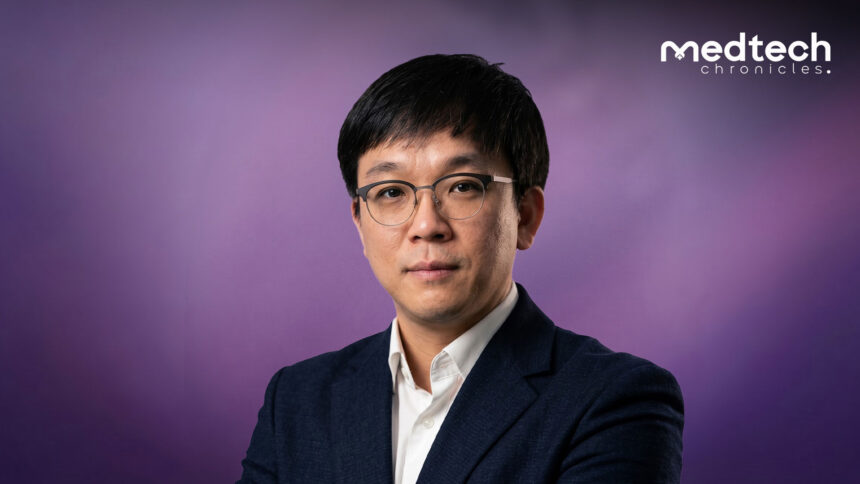
At the forefront of this technological shift stands Dr. Yeha Lee, who serves dual roles as both the Co-Founder and CEO of VUNO Inc. Dr. Lee is a highly respected computer scientist and researcher who recognized the transformative potential of deep learning long before artificial intelligence became a mainstream corporate buzzword.
Dr. Lee completed his advanced studies in computer science, earning a Ph.D. that deeply focused on machine learning and natural language processing. His early professional journey led him to the prestigious Samsung Advanced Institute of Technology (SAIT). At SAIT, he worked alongside some of South Korea’s brightest engineering minds, focusing on advanced research and development.
It was during his time at Samsung that Dr. Lee teamed up with his colleagues, Hyun-Jun Kim and Kyuhwan Jung. Together, this foundational trio observed how rapidly deep learning was disrupting industries like consumer electronics and smartphone technology. They quickly realized that this same powerful technology could be applied to a sector where it would make the most profound human impact: clinical medicine.
The Drive to Save Lives Through Algorithms
Dr. Lee’s personal motivation was born out of a desire to see cutting-edge research move out of the laboratory and into the real world. During his academic and early professional career, he noticed that while many brilliant machine learning algorithms were being published in journals, very few were actually helping everyday people. He saw an immense gap between abstract mathematics and practical application.
He was particularly moved by the vulnerabilities within hospital wards. Dr. Lee understood that doctors are inherently limited by time, fatigue, and cognitive load. A computer algorithm, by contrast, never grows tired, never sleeps, and can analyze thousands of data points in a fraction of a second.
The thought of using deep learning models to catch life-threatening conditions before they became fatal became his core mission. Dr. Lee believed that if an AI system could analyze an electrocardiogram (ECG) or a chest X-ray and flag an anomaly that a human might miss during a busy night shift, countless families could be spared the pain of losing a loved one. This deep sense of purpose pushed him to leave the comfort of a stable corporate career to build something completely from scratch.
Constructing a Pioneer in Medical Artificial Intelligence
In December 2014, Dr. Lee, alongside Kim and Jung, officially incorporated VUNO Inc. in Seoul, South Korea. The early days were filled with the typical trials of a deep-tech startup. At the time, the concept of allowing an artificial intelligence algorithm to assist in medical decision-making was met with widespread skepticism from regulatory bodies and traditional physicians alike.
The co-founders had to build their foundational deep learning models from the ground up. They focused on creating proprietary architectures that could ingest complex medical datasets. The core strategy was clear: develop a suite of software solutions, collectively known as VUNO Med, that could cover various medical specialties, including radiology, pathology, and cardiology.
Under Dr. Lee’s strategic leadership, VUNO achieved historical milestones in regulatory approval. The company developed the world’s first AI-based medical devices cleared by South Korea’s Ministry of Food and Drug Safety (MFDS). They systematically proved to regulators that their software was not a black box of mysteries, but a highly validated, consistent mathematical tool that enhanced diagnostic accuracy.
Navigating Regulatory Hurdles and Achieving Market Access
Building a successful medical AI company requires navigating rigorous global regulatory frameworks. For VUNO, the road to global commercialization has been a journey of constant iteration, resilience, and clinical validation. Dr. Lee has consistently championed a culture that treats regulatory feedback not as a barrier, but as a map for improving product safety.
A clear example of this approach occurred when VUNO sought U.S. Food and Drug Administration (FDA) clearance for its highly anticipated cardiac-arrest prediction AI, known as VUNO Med-DeepCARS. This sophisticated software analyzes a patient’s vital signs to predict the risk of sudden cardiac arrest within 24 hours. When initial feedback from the U.S. regulator indicated that additional clinical data was needed to meet their strict standards, Dr. Lee handled the situation with transparency and determination.
Instead of pulling back, he openly acknowledged the high standards required by the global market. He took full responsibility and immediately directed his engineering and clinical teams to organize supplementary datasets to prepare for a swift resubmission.
This resilient mindset has driven massive growth across other segments of the company. VUNO successfully secured FDA 510(k) clearance for VUNO Med-Deepbrain, an AI tool that measures and quantifies brain atrophy on MRI scans. This tool assists clinicians in identifying early signs of dementia and Alzheimer’s disease before visible cognitive decline takes hold.
Furthermore, the company has successfully expanded its footprint into Europe and the Asia-Pacific region by forming deep alliances with international healthcare players, establishing a truly global standard for AI-driven patient care.
Establishing Global Standards in Bio-Signal Intelligence
Dr. Lee’s deep technical expertise has earned him immense recognition across both public and private sectors. His deep understanding of how to train neural networks on sensitive clinical data led to his appointment as a member of the Presidential Advisory Council on Science and Technology in South Korea. In this role, he helped shape national policies around AI innovation, digital health data infrastructure, and regulatory standardization.
Under his guidance, VUNO has pioneered breakthroughs that extend far beyond traditional radiology. While many AI companies focus solely on analyzing static images like X-rays, Dr. Lee pushed VUNO deep into the domain of bio-signals.
A prime example of this innovation is the development of VUNO Med-DeepECG Kidney, a software system designed to screen for chronic kidney dysfunction using non-invasive electrocardiogram data. By training models to see microscopic electrical patterns in a heart tracer that are completely invisible to the human eye, Dr. Lee’s team unlocked a completely new way to detect systemic diseases early.
A Culture Rooted in Scientific Integrity and Transparency
As a leader, Dr. Lee rejects the hyper-aggressive, flashy style often found in the broader tech industry. Instead, he practices a leadership philosophy rooted in scientific integrity, thorough peer-reviewed validation, and collaborative problem-solving. He treats VUNO not just as a software business, but as a critical healthcare institution.
He encourages his teams of data scientists, medical directors, and software engineers to work in close harmony. Dr. Lee believes that an AI developer cannot build a truly useful medical tool without spending time in actual hospital wards, understanding the real-world workflows and daily frustrations of doctors and nurses.
He encourages a flat corporate structure where clinical truth overrides corporate hierarchy. If a piece of data shows that an algorithm is underperforming in a specific scenario, that information is openly examined and addressed. This transparent approach has built an incredibly strong level of trust between VUNO and the global medical community.
Transforming the Landscape of Predictive Medicine
The future of healthcare is rapidly moving away from reactive treatment and toward continuous, predictive care. Dr. Lee envisions a world where artificial intelligence acts as an invisible, omnipresent layer of safety across all tiers of medicine, from major research hospitals to remote rural clinics and home health monitoring systems.
VUNO’s strategic roadmap involves deeply integrating its AI models directly into medical hardware, such as handheld ECG devices, portable X-ray machines, and continuous bedside monitors. By embedding these intelligent algorithms directly into the devices that patients interact with daily, the time between detecting a symptom and delivering a life-saving intervention drops to nearly zero.
As Dr. Lee continues to steer VUNO through its next phase of global expansion, his core focus remains unchanged. He continues to prove that when advanced deep learning is guided by a profound respect for human life and rigorous scientific discipline, technology can do far more than optimize workflows; it can truly protect and extend human lives.