



Every year, approximately 140 million infants are born across the globe. For the vast majority of these newborns, the standard medical protocol at birth involves immediate, routine checkups: physical measurements, vital sign monitoring, and APGAR scoring. Yet, behind the visible markers of a healthy infant lies a critical vulnerability that often evades standard clinical observation: the brain.
Neurological abnormalities at birth are far more common than many realize, often showing no immediate outward physical signs. When a baby experiences a lack of oxygen or a subtle birth trauma, the brain waves alter, but the infant may appear perfectly peaceful to the untrained eye. Without immediate identification, these silent injuries slip through the cracks, leaving families unaware until developmental delays surface months or even years down the road.
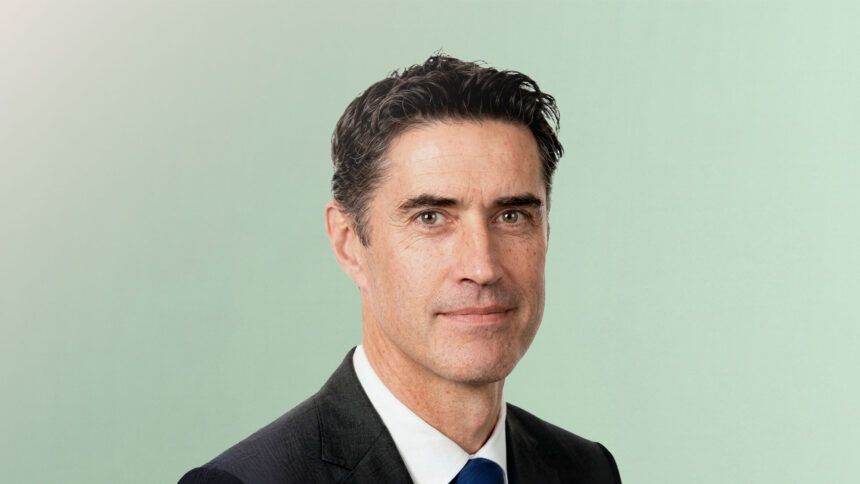
Enter CergenX, a pioneering medical technology company that has set out to change the trajectory of newborn healthcare. By combining decades of deep academic research with cutting-edge artificial intelligence, this Irish startup aims to do what was once deemed impossible: make rapid, objective newborn brain screening an accessible, universal standard of care. At the helm of this ambitious venture is Jason Mowles, a seasoned transformation leader who has transitioned from the highly structured world of corporate banking to spearhead a healthcare revolution. Through a platform that turns complex brainwave data into simple, actionable clinical insights within minutes, CergenX is bridging a massive gap in neonatal care and offering a lifeline to the world’s most vulnerable patients.
The Silent Crisis in Neonatal Wards
To understand the magnitude of what CergenX is tackling, one must look at the sobering data underlying neonatal neurology. Statistical evidence indicates that approximately five out of every 1,000 newborn babies suffer from some form of brain abnormality or injury at birth. This translates to hundreds of thousands of infants every year who enter the world with compromised neurological health.
The core of the problem is not a lack of diagnostic tools, but rather a lack of accessibility. Currently, the undisputed gold standard for assessing brain function in newborns is electroencephalography (EEG). By measuring the tiny, delicate electrical impulses generated by the brain, an EEG can pinpoint exact areas of abnormal activity or distress. However, traditional EEG systems are inherently complex, highly expensive, and logistically demanding. They require specialized machinery, the painstaking placement of numerous electrodes across an infant’s scalp, and, crucially, a highly trained pediatric neurologist or neurophysiologist to interpret the labyrinth of waveforms.
Because neonatal brain waves are vastly different from those of older children or adults, reading them is a rare and specialized skill. Most hospitals do not have a neonatal EEG expert on call 24/7. Consequently, routine screening for every single newborn using traditional methods is a physical and economic impossibility. Instead, EEG monitoring is reserved strictly for high-risk cases, such as infants who have suffered severe, visible oxygen deprivation or those displaying active seizures.
This leaves a massive population of “seemingly healthy” infants completely unmonitored. When a mild or moderate brain injury goes unnoticed, the window for optimal therapeutic intervention closes. Treatments like therapeutic hypothermia (brain cooling) or specific pharmaceutical therapies are highly time-sensitive; they must be administered within the first few hours of life to effectively mitigate long-term damage. When a child is finally diagnosed at 18 to 24 months due to missed developmental milestones, the opportunity for preventative care is long gone, resulting in lifelong challenges for the child, the family, and the healthcare system.
From Financial Landscapes to Neonatal Care
The journey to solve this global crisis required a leadership figure who understood how to scale complex solutions and manage massive structural shifts. Jason Mowles, the CEO and Co-Founder of CergenX, brought exactly that background, albeit from an unexpected source. Mowles spent more than 25 years navigating the upper echelons of banking, corporate finance, and enterprise change management.
Before diving into the medtech space, Mowles built an impressive reputation as a corporate transformation executive in Ireland. Notably, he served as the Finance Director of the Transformation and Change Division at the Bank of Ireland. In this high-stakes environment, Mowles spearheaded the strategic, financial, and commercial blueprints for a massive €1.5 billion digital transformation initiative. His career also featured pivotal leadership roles managing change divisions within other prominent institutions and third-party outsourcing firms, including the Bank of Scotland, Ireland, and Certus.
For over two decades, Mowles’ daily professional reality revolved around risk mitigation, multi-million-dollar financial models, and migrating legacy systems into agile, modern digital infrastructures. He was an expert at looking at highly intricate, data-heavy operations and designing the commercial roadmaps necessary to make them efficient and scalable. However, corporate finance, while rewarding, lacked a certain human-centric purpose. Mowles possessed a latent desire to apply his decades of structural and financial expertise toward a venture that could yield a direct, profound, and measurable impact on human lives.
A Fusion of Purpose and Peerless Science
The spark that transformed Mowles from a banking executive into a medtech founder was a meeting of minds with one of the world’s leading authorities on neonatal neurology: Professor Geraldine Boylan. Boylan is a Professor of Neonatal Physiology at University College Cork (UCC) and the co-founder and director of the INFANT Research Center. For decades, the INFANT Center had been quietly executing a visionary task: meticulously collecting, archiving, and annotating the brainwave data of hundreds of newborn infants.
Long before the modern boom of machine learning and commercial artificial intelligence, Boylan and her team recognized that neonatal brain waves held the secrets to early injury detection. They built a pristine, globally unique databank of neonatal EEG data, complete with expert annotations of waveform abnormalities and background patterns.
When Mowles crossed paths with Professor Boylan, he recognized a classic transformation challenge. Boylan possessed world-class, life-saving scientific research, but keeping that research confined to academic papers meant its clinical impact remained limited. To save babies at scale, the science needed to be commercialized, packaged into an accessible product, and deployed into hospitals worldwide.
Mowles saw that by combining Boylan’s peerless clinical data with advanced software development and solid corporate governance, they could build an automated screening tool. To round out the founding trio, they brought in Sean Griffin as Chief Technology Officer. Griffin, a veteran software architect with over 36 years of experience, had previously served as the CTO of Poppulo, a highly successful Irish enterprise software business that later executed a major international merger. Together, in 2021, the three officially spun CergenX out of University College Cork, subsequently establishing its corporate headquarters in Dublin, creating a powerhouse triad combining deep clinical expertise, robust software engineering, and corporate execution.
Engineering the CergenX Wave
With the company formally established, Mowles and his team set out to build their flagship software platform: the CergenX Wave. The fundamental philosophy behind the technology was simplicity at the point of care. Mowles knew that if the device required a specialist to operate or interpret, it would fail to achieve universal adoption. The goal was to build a system that could be seamlessly operated by any nurse, midwife, or general pediatrician with minimal training.
The team achieved this by leveraging advanced artificial intelligence models. Interestingly, Mowles points out that many of the AI frameworks utilized in the CergenX Wave share structural similarities with the algorithms that power modern smart assistants like Apple’s Siri or Amazon’s Alexa. Just as a smart assistant processes acoustic audio waves, identifies patterns, and extracts meaning, the CergenX AI processes the complex electrical frequencies generated by the human brain.
The CergenX Wave operates on a simple, brilliant architecture. Instead of the cumbersome multi-electrode setups used in full diagnostic EEGs, the Wave interfaces with a compact, compatible 2-channel EEG amplifier utilizing only a few strategically placed electrodes on the infant’s head. Once the caregiver presses start, the software runs an immediate, automated quality check to ensure the electrode connections are secure and transmitting cleanly. It then records just 10 to 15 minutes of 2-channel brainwave data.
The recorded data is securely analyzed by cloud-based AI models trained on INFANT’s decades of annotated data. By keeping the AI cloud-based, CergenX ensures that every hospital always has instantaneous access to the absolute latest, highly refined algorithm updates without needing manual hardware servicing. The system bypasses complex graphs and raw waveforms completely. Instead, it delivers a direct, objective assessment on a screen. Using an intuitive traffic-light interface, a green indicator gives the infant a clean bill of health, while a red indicator flags a potential abnormality, signaling that the baby should be referred to a physician for a comprehensive diagnostic evaluation, such as a full EEG, MRI, or CT scan.
Overcoming the Regulatory Hard Slog
Transitioning from an abstract software prototype to a regulated, market-ready medical device is a notoriously grueling journey. For Mowles, leaving the fast-paced financial market meant adjusting to the deliberate, methodical, and legally intensive timelines of the healthcare industry. As Mowles frequently notes when reflecting on his startup journey, one of the biggest lessons he had to embrace is that everything in medtech takes considerably longer than initially anticipated.
Spinning out a company from a university framework requires navigating intricate intellectual property structures. Furthermore, training medical AI models requires an immense amount of hard slog, the exhausting process of cleaning, pre-processing, and precisely labeling reams of historical neonatal data to ensure the algorithms achieve flawless accuracy.
To fund this intensive development lifecycle, Mowles put his financial expertise to work. Following an initial €800,000 seed round in early 2022 and a subsequent €1.2 million private financing round in 2023 backed by high-net-worth investors and Enterprise Ireland, the company aggressively expanded its runway. By securing targeted development grants and accelerator backing, CergenX systematically drove its total funding over time to $4.49 million. This capital cushion enabled Mowles to transition the firm from a lean spin-out into a scaled operation employing a dedicated team of 19 specialized professionals.
With capital secured, Mowles prioritized building an elite operational infrastructure. The company brought on board specialized industry leaders, including Dr. John O’Toole (a biomedical engineer with two decades of neonatal neuromonitoring experience) as Head of AI Research, and Thais Sala as Head of Quality and Regulatory Affairs. Under Mowles’ guidance, the team has navigated the rigid frameworks of ISO 13485 compliance and international medical device clearances (including the FDA in the United States and CE marking in Europe), ensuring that their life-saving innovation stands up to the absolute highest standards of safety and clinical integrity.
A Visionary Perspective on Augmented Medicine
As a leader, Jason Mowles possesses a remarkably pragmatic and collaborative view of how technology should integrate into modern healthcare. In an era where AI is frequently hyped as a replacement for human work, Mowles explicitly rejects the notion that artificial intelligence should displace medical professionals.
Instead, Mowles champions the concept of augmented medicine. He emphasizes that the CergenX Wave is strictly a screening tool, not a definitive diagnostic system. It is designed not to replace the nuanced expertise of physicians, but rather to augment their clinical examinations. By delivering objective, specialist-level EEG insights directly to the bedside on demand, the technology essentially acts as a 24/7 digital assistant for frontline caregivers, answering a single, profoundly important question: Should I be worried about this baby’s brain or not?
Furthermore, Mowles brings a refreshing long-term sustainability lens to the tech and hardware partnerships CergenX forms. When selecting hardware manufacturers to construct or bundle the physical devices that host the CergenX software, Mowles insists on partnering exclusively with companies that maintain active, verifiable corporate sustainability and environmental programs. For Mowles, protecting the health of the next generation goes hand-in-hand with protecting the planet they will inherit.
The Strategic Blueprint of an Empowering Leader
The corporate culture at CergenX directly mirrors Mowles’ background in change management: structured, highly supportive, and deeply rooted in open communication. Moving from multi-billion-dollar bank infrastructures to an agile medtech startup, Mowles understood that a leader’s primary job is to assemble world-class experts and then empower them with the autonomy to innovate.
Mowles’s leadership style relies heavily on collaborative execution. He actively encourages his team to cross-pollinate ideas across disciplines, fusing the thoughts of theoretical physicists, healthcare informatics specialists, and neuropharmacologists. Rather than keeping departments isolated, he utilizes agile communication infrastructures like Slack, AWS, and video conferencing to maintain absolute transparency and speed.
One of Mowles’ fundamental pieces of advice to fellow entrepreneurs is to aggressively dismantle professional ego. He openly counsels other startup founders to constantly seek out external expert advice, listen intently to sector specialists, and respect the long iterations required to build things correctly. By combining this humble, learning-oriented approach with the sharp, rigorous commercial discipline of an experienced corporate director, he has built a highly resilient startup culture that remains focused on its core mission amid regulatory pressures and technical hurdles.
Redefining Global Healthcare Safeguards
Looking toward the horizon, the trajectory for CergenX is remarkably expansive. The company’s initial commercial go-to-market strategy focuses heavily on Europe, the United Kingdom, and the United States. This combined territory represents a market of approximately 8 to 9 million births every single year. Through ongoing product pilots, clinical engagements, and presentations at prestigious global medtech stages, such as the LSI Europe Emerging Medtech Summit, CergenX is solidifying its position as a transformative force in Western neonatal wards.
However, Jason Mowles’ ultimate vision stretches far beyond wealthy healthcare systems. His true north star is global health equity. Out of the 140 million babies born across the planet each year, the vast majority are delivered in developing nations and resource-constrained environments where access to pediatric neurologists is completely nonexistent. Because the CergenX Wave requires no specialist skills to operate, is cloud-scalable, and can run on affordable, streamlined hardware configurations, it holds the potential to democratize neurological care on a global scale.
The long-term ambition driving Mowles, Boylan, and Griffin is as simple as it is revolutionary: to completely shift the baseline of neonatal medicine until rapid newborn brain screening is as normal, expected, and routine as checking a baby’s weight or listening to their heartbeat. By turning decades of silent data into a roaring voice for early intervention, Jason Mowles and CergenX are ensuring that every infant, regardless of where they are born, is granted the best possible opportunity to live a healthy, vibrant, and unimpeded life.