

Every night across the United States, thousands of home health clinicians finish a demanding day of patient care only to begin a grueling second job. Sitting at kitchen tables, desks, or in parked cars after dark, these nurses and therapists spend hours typing notes, filling out exhaustive federal assessment forms, and fighting with outdated software. The administrative burden is so severe that it has become a quiet crisis, draining the energy of the workforce and pushing the home healthcare system to a breaking point.
While hospitals and conventional clinics have seen steady waves of technological investment, the home-based care sector has largely been left behind. The software anchoring these vital services was designed decades ago, serving more as digital filing cabinets than functional tools. As a result, highly trained medical professionals spend nearly as much time on paperwork as they do with patients. The systemic friction does not just cause burnout; it actively restricts the number of vulnerable patients an agency can accept, leaving thousands of families struggling to find care for aging relatives.
The Fragmented World of Legacy EHR Systems
The fundamental problem lies in the core technology that home health agencies rely on daily: the Electronic Health Record (EHR). Most home health EHR platforms dominating the market today were built between the late 1980s and the early 2000s. These systems were architected long before modern cloud computing, mobile design, and artificial intelligence existed. Over the years, as healthcare compliance grew more complex, technology vendors attempted to keep up by layering separate, third-party software tools on top of these aging systems.
This patchwork architecture has turned agency operations into a chaotic administrative maze. A typical home health provider must use one software platform to receive patient referrals from hospitals, another to verify insurance eligibility, a third to build staff schedules, a separate program for in-home clinical documentation, and yet another tool for quality assurance and billing. Because these disjointed applications do not naturally communicate, human workers are forced to act as the manual glue holding the systems together.
Employees must constantly re-enter the exact same patient data across five or six open browser tabs, creating massive operational bottlenecks. For example, a standard referral package sent from a hospital to a home health agency averages about 70 minutes of manual processing time just to read the files, verify the service area, and make an admission decision. Meanwhile, clinicians are subjected to the dreaded Outcome and Assessment Information Set (OASIS), a massive, federally mandated assessment required for Medicare patients that takes up to an hour of manual typing per visit. This overwhelming workload contributes to a devastating statistic: clinician turnover in home health averages nearly 80% within the first 100 days of employment.
A New Architect for Post-Acute Technology
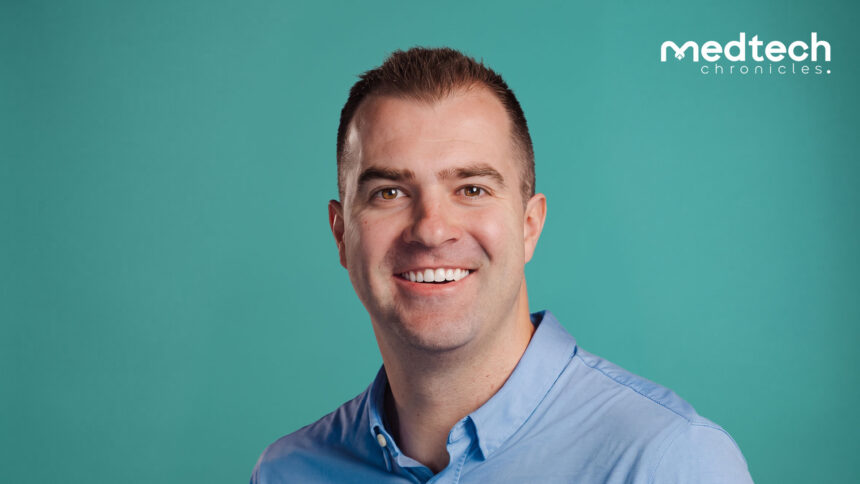
Recognizing that the post-acute healthcare landscape was suffocating under this administrative weight, Zach Newman stepped forward to build a definitive alternative. Based in Lehi, Utah, Newman is a dedicated builder and tech operator who operates with a clear, singular focus: modernizing post-acute healthcare infrastructure to ensure an aging national population can receive dignified, efficient care at home. In March 2024, Newman co-founded Enzo Health alongside his business partner, Dan Conger, and stepped away from Utah’s thriving Silicon Slopes tech hub.
Serving as the CEO, Newman brought a grounded, practical perspective to an industry cluttered with empty tech jargon. Rather than building software from an isolated executive boardroom, Newman chose to embed himself directly within the daily realities of the field. He spent over two years inside operating home health agencies across the country, sitting shoulder-to-shoulder with intake coordinators, scheduling managers, and field nurses. By listening to the precise frustrations of the people using the software, Newman gained a granular understanding of the structural flaws built into legacy EHRs, positioning Enzo Health not just as another tech vendor, but as a true operational partner.
Embracing the Reality of the Caregiver
Newman’s personal drive to revolutionize home health technology stems from a deep respect for the clinicians working on the frontlines of care. During his extensive time shadowing home health workers, he observed that the industry’s critical labor shortage is not a staffing problem at its root; it is a documentation crisis in disguise. He watched dedicated caregivers balance laptop computers on their steering wheels between home visits, struggling to check boxes and clear compliance flags instead of focusing on the elderly and recovering patients who needed their clinical attention.
Newman realized that the traditional tech industry’s approach to solving this issue was fundamentally broken. For years, tech companies had been selling standalone AI “features” or plug-ins that promised to make documentation faster. However, Newman saw that fast-tracking a single task did not fix a broken foundation; it simply generated errors faster, forcing backend quality assurance teams to spend hours correcting data mismatches. This realization sparked a powerful motivation: to completely eliminate the need for disjointed point solutions by creating a unified, automated foundation designed explicitly for the human experiences of home care.
Engineering an Intelligent Care Foundation
With a clear mission established, Newman and Conger officially launched Enzo Health in early 2024. The company was founded on a strict architectural principle: while artificial intelligence features can easily be bolted onto existing software, a legacy system can never be made truly AI-native after the fact. Instead of trying to patch old software frameworks, the Enzo team built an entirely new Electronic Health Record system completely from scratch, placing artificial intelligence at the absolute center of its data architecture.
The strategy was to construct a single, cohesive ecosystem where data moves seamlessly across the entire lifecycle of a patient’s care, from initial hospital referral to final insurance reimbursement. This work culminated in the official launch of the comprehensive Enzo EHR platform on June 1, 2026. The platform integrates four core intelligent modules into one automated source of truth, leaving zero need for data re-entry:
- Enzo Intake: Automatically processes incoming e-faxes and hospital portal uploads, instantly verifying patient eligibility, mapping service areas, and identifying core diagnosis codes.
- Enzo Scribe: An ambient clinical documentation tool that securely listens to natural, face-to-face conversations between a nurse and a patient, automatically drafting comprehensive OASIS and SOAP notes in real time.
- Enzo Scheduling: Instantly matches and assigns a clinician to a new patient within 30 seconds by automatically evaluating employee caseloads, travel routing, and clinical specializations.
- Enzo QA: Continuously audits clinical charts at the exact moment of documentation, catching billing and compliance errors before claims are ever sent to insurance payers.
Navigating the Hurdles of Exponential Scale
Building an entirely new core platform for a highly regulated industry like healthcare is a monumental task, and the early days of Enzo Health required navigating significant hurdles. Operating in a sector tied to strict federal compliance meant that Newman’s team could never compromise on data protection. They had to design a highly sophisticated, HIPAA-compliant infrastructure ensuring that sensitive patient health information is processed inside a completely secure environment, never exposing private data to external consumer AI networks.
Despite the high barriers to entry, the market response to Enzo’s native architecture was immediate and explosive. Under Newman’s leadership, Enzo Health achieved an astonishing 40x revenue growth between the release of its first product modules in 2024 and the full EHR platform rollout in 2026. This rapid market traction caught the attention of top-tier Silicon Valley institutional investors. In May 2026, Enzo Health secured a massive $20 million Series A funding round led by N47 (Next47), with participation from major firms including Gradient, Tandem Ventures, Rigby Watts, Lionel Partners, and Soma. This round brought the young company’s total funding to $26 million, providing the financial runway required to scale operations nationwide.
The Paradigm Shift of Native Intelligence
Through this intense period of development, Newman has solidified his reputation as a leading authority on healthcare technology. He points out that the industry is currently moving through a massive shift, declaring that the “patchwork era” of enterprise software is officially over. In Newman’s view, the old model of buying a dozen different software subscriptions and forcing human employees to manage the messy connections between them is completely unsustainable for modern businesses.
Newman regularly advocates for a clear distinction in the market: the difference between software that is merely “AI-powered” and software that is “AI-native.” He emphasizes that adding an AI tool to a 20-year-old software foundation does not fix the underlying inefficiencies. True modern efficiency requires a complete reimagining of how data flows. By utilizing a system where every module naturally understands the context of the others, businesses can transition from basic digital record-keeping to fully automated, intelligent workflows that actively work on behalf of the staff.
Keeping Humans in the Loop
As an executive, Newman practices a balanced and grounded approach to leadership. While he leads a cutting-edge artificial intelligence company, his leadership philosophy remains deeply human-centric. Within Enzo Health’s offices, Newman fosters a culture focused on solving real-world operational problems rather than chasing fleeting technology trends. He emphasizes to his engineering teams that their success is measured solely by the amount of time and peace of mind they return to clinical workers out in the field.
This philosophy is directly reflected in the design of Enzo’s technology, which enforces a strict “human-in-the-loop” protocol. Newman strongly rejects the idea of using technology to replace human medical staff. Instead, his leadership style centers on empowerment: the technology is built to handle the repetitive, manual tasks, like reading long faxes or searching for codes, so that human professionals can reserve their energy for critical clinical judgment and direct patient care. The AI drafts the material, but the human clinician always reviews, edits, and signs off.
Expanding the Footprint of Care
Today, the impact of Enzo Health’s platform is visible across the United States. Agencies running on the system collectively manage care for more than 500,000 patients annually. The concrete results reported by home health operators highlight a massive shift in daily operations. Agencies using Enzo Intake have watched their referral processing times drop from an industry baseline of 70 minutes down to just 5 minutes, allowing them to accept patients and coordinate care almost instantly. Clinicians utilizing Enzo Scribe report an average 75% reduction in charting time, finally eliminating the exhausting hours of documentation following them home at night.
Looking ahead, Newman is positioned to drive Enzo Health far beyond its initial boundaries. With the successful nationwide rollout of the home health EHR system secured, the company’s long-term roadmap includes expanding its native architecture into other vital sectors of post-acute care, including standalone hospice agencies and skilled nursing facilities. As America’s baby boomer generation continues to age, the demand for home-based medical services will only intensify. Backed by a powerful architecture and an unyielding commitment to the healthcare workforce, Newman is ensuring that the technology powering this care is finally ready for the future.