

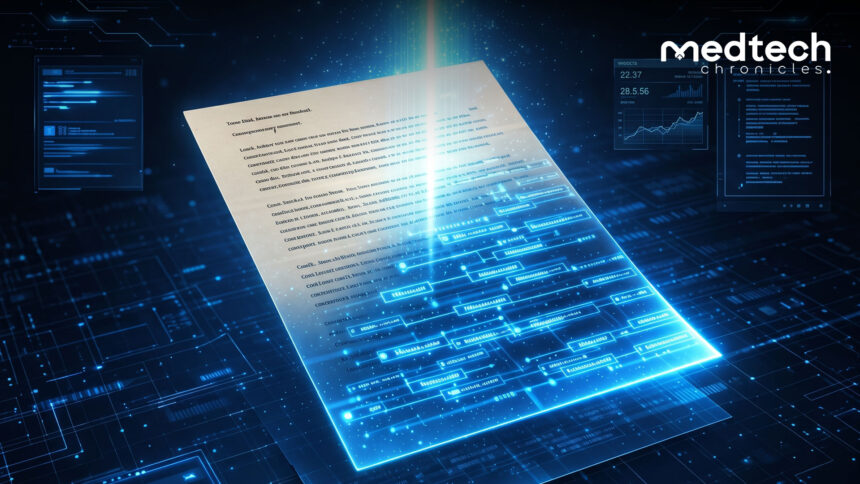
Picture a first-year PhD student staring down 200 PDFs for a literature review that’s due in three weeks. A decade ago, that was months of highlighting, spreadsheet-building, and squinting at methods sections at 1 a.m. Today, that same student opens a browser tab, drops in a research question, and lets an AI tool do the first pass. This is where generative AI for analyzing scientific papers has quietly become part of the everyday research toolkit, not as a replacement for reading, but as a way to survive the sheer volume of what needs reading.
And the shift isn’t small. A 2025 analysis published in Science, which examined nearly 2.1 million abstracts from three major preprint servers between January 2018 and June 2024, found something researchers had suspected but hadn’t quantified: scientists who lean on generative AI to help write and process papers are publishing at a noticeably higher rate, and their papers tend to use more complex language and cite a broader range of sources. That’s not a fringe trend anymore. That’s a measurable change in how science gets produced.
What “Analyzing a Paper With AI” Actually Means Now
It helps to be specific here because “AI reads your papers for you” oversells what’s actually happening. In practice, researchers are using generative AI for a handful of distinct jobs: finding relevant papers in the first place, pulling structured data out of dozens of studies at once, checking whether later research supports or contradicts a given finding, and generating quick evidence summaries so they don’t have to open every single PDF cold.
One computational social scientist involved in the Science study, Cornell’s Yian Yin, put it plainly: the consequential, real-world patterns emerged faster than expected. That’s the honest state of things in mid-2026: adoption outpaced anyone’s careful predictions about how it would unfold.
Can AI Actually Read a Scientific Paper the Way a Human Does?
Not quite. AI tools extract and summarize claims, methods, and data points from papers with impressive speed, but they don’t independently evaluate whether a study’s evidence is actually sound. That judgment call still belongs to the researcher, and skipping it is where most AI-assisted mistakes happen.
That distinction matters more than it sounds. A tool can tell you that a paper reports a large effect size. It can’t always tell you that the sample size was 12 undergraduates from one university, or that the “significant” result barely cleared p < .05 after a questionable correction. Reading for method quality is still a human job. AI is very good at the retrieval and summarization layer sitting underneath that judgment.
The Tools Researchers Are Actually Reaching For in 2026
The tool landscape has actually split into fairly clear lanes, and it’s worth knowing which lane you’re in before picking one.
Elicit and Consensus, the extraction-vs-verdict split
Elicit has become the go-to for structured evidence work, the kind where you need a table comparing sample sizes, methods, and effect sizes across dozens of studies. A recent comparison noted that Elicit is the only AI research tool offering a true systematic review screening pipeline, capable of running structured inclusion and exclusion criteria across a database of more than 138 million papers.
Consensus takes a completely different angle. Instead of building extraction tables, it answers yes-or-no research questions directly. Ask it whether a specific intervention works, and it returns a “consensus meter” showing whether the evidence leans yes, no, or mixed, a feature no other research tool has quite replicated. For a clinician or policy analyst who needs a fast, evidence-weighted answer rather than a full systematic review, that’s often exactly the shortcut they want.
SciSpace, Semantic Scholar, and Scite, the discovery layer
SciSpace leans into breadth rather than depth, pulling from a database of more than 280 million papers across multiple sources, including Google Scholar and PubMed, and bundling in an AI writer and specialized research agents on top. Semantic Scholar remains the free workhorse for large-scale discovery, and Scite does something neither of the above really does: it checks whether later papers actually support, contradict, or merely mention the finding they’re citing, instead of just counting citations as a blanket vote of confidence.
Most working researchers in 2026 aren’t loyal to just one of these. A recent roundup of eight academic AI tools put it well: the most effective researchers combine several tools depending on which step of the process, search, extraction, source-checking, or synthesis, is the actual bottleneck that week.
Is It Okay to Use AI for a Literature Review?
Yes, with a catch, most academic publishers now require you to disclose it. According to Harvard’s guidance on the topic, most academic publishers require researchers using AI tools to document that use in the methods or acknowledgments section of the paper, and policies vary enough between journals that it’s worth checking before you submit.
That disclosure requirement isn’t bureaucratic box-checking. It exists because the line between “AI helped me organize my sources” and “AI wrote conclusions I didn’t independently verify” isn’t always obvious from the outside, and journals want that line visible.
Where This Still Goes Wrong
Here’s the uncomfortable part nobody puts on the tool’s landing page. A study led by Stanford’s James Zou, examining submissions to the NeurIPS conference, found the average number of objective mistakes in submitted papers rose by roughly 55% between 2021 and 2025, and Zou’s own read on it is that this is most likely tied to human error amid a surge in submission volume, not necessarily AI hallucinating facts outright. Still, more papers moving through the pipeline faster, with AI doing more of the first-pass reading, mean less room for a tired human to catch what slipped through.
There’s an older, more direct warning too. One evaluation comparing ChatGPT and Bing AI as literature-search tools for systematic reviews found that of nearly 1,300 studies ChatGPT surfaced, only seven, about half a percent, turned out to be directly relevant, compared with the human benchmark of two dozen studies found through conventional search. The researchers’ own conclusion was blunt: using ChatGPT for real-time evidence generation wasn’t yet accurate or feasible, and caution was warranted. That study is a couple of years old now, and purpose-built tools like Elicit and Consensus have closed much of that gap. But the underlying lesson hasn’t expired: a general-purpose chatbot is not the same tool as a research-grade retrieval system, and treating them interchangeably is how errors slip into a reference list.
What AI Tool Do Researchers Use Most for Papers?
There isn’t one universal winner; it depends on the task. Elicit tends to dominate structured extraction and systematic screening. Consensus wins for fast, evidence-weighted yes/no questions. Semantic Scholar remains the default free option for broad discovery, and Scite is the pick when the question is really about citation integrity.
A medical-research-focused breakdown from earlier this year framed the distinction in stakes that matter: mixing up AI research tools that summarize the literature with clinical decision-support tools that summarize treatment guidelines is, in their words, a genuine patient safety risk at the bedside. That’s a sharper way of saying what’s true everywhere in research: know what your tool is actually built to do before you trust its output.
The Workflow That’s Actually Working
The researchers getting the most out of this, the ones publishing more without publishing worse, tend to follow a similar shape. They use discovery tools like Semantic Scholar or SciSpace to cast a wide net, structured-extraction tools like Elicit to build comparison tables instead of doing it by hand, a citation-verification layer like Scite before they trust a “this confirms X” claim, and, critically, they still read the papers that matter most, in full, themselves.
Generative AI to analyze scientific papers didn’t eliminate the need for reading. It changed which papers deserve a researcher’s full, undivided attention, and it freed up the hours that used to go toward skimming the ones that didn’t. That’s not a smaller shift than the hype suggested. It’s just a different one, less about AI doing the science and more about AI clearing the runway so scientists can actually get to it.