



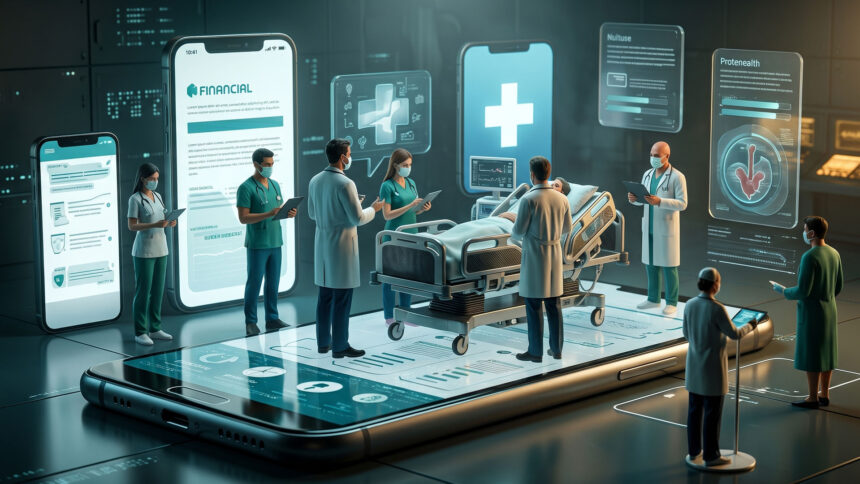
Picture this: a 68-year-old woman with a heart condition goes home after surgery. Her wearable monitor tracks her rhythm every minute. If her pulse trends toward something dangerous, her cardiologist’s system flags it before she feels anything wrong. No emergency room. No frantic midnight call. Just a quiet alert, followed by a call the next morning from her care team.
That’s not a vision of the future. That’s smart healthcare ecosystems operating the way they were designed to. And in 2025 and 2026, that kind of care is expanding fast, not just in elite hospital systems, but across the global health infrastructure. The question isn’t whether these ecosystems are changing medicine. They already are. The question is what they actually look like under the hood, what’s working, and where the cracks are still showing.
What Is a Smart Healthcare Ecosystem?
A smart healthcare ecosystem is a network of interconnected technologies, data systems, care providers, and patients that work together to deliver continuous, intelligent, and personalized health management across hospital walls, home settings, and everything in between.
It’s not just a hospital with better equipment. A true smart healthcare ecosystem links wearable sensors, electronic health records (EHRs), AI-powered diagnostic tools, remote patient monitoring platforms, and cloud infrastructure into a single, coordinated system. Data flows, in theory, without friction. Clinicians get a fuller picture. Patients get care that follows them.
The backbone technologies are well-established by now: IoT devices that monitor vitals in real time, AI algorithms that flag anomalies before symptoms appear, telemedicine platforms that extend reach into rural and underserved communities, and big data analytics that support population health decisions. But what separates a genuine smart healthcare ecosystem from a pile of expensive, disconnected tools is integration. That’s the variable that makes or breaks it.
How Smart Healthcare Ecosystems Actually Work in Practice

Walk into a forward-thinking hospital today, and you’ll see smart systems layered into almost every process. Smart hospitals use IoT-integrated infrastructure and predictive AI to anticipate sepsis, standardize imaging quality, monitor bed capacity, and optimize supply chains, transforming hospitals from reactive environments into responsive, data-driven ecosystems.
That last part is worth slowing down on. Reactive vs. responsive. For most of healthcare’s modern history, the system has waited for you to get sick. You come in. You get treated. You go home. Smart healthcare ecosystems are built around a fundamentally different logic: catch it earlier, monitor it continuously, and intervene before the crisis.
Remote patient monitoring is one of the clearest examples of that shift. Research shows it has reduced hospital readmission rates by 45% for heart failure patients. That’s not a marginal gain; that’s a structural change in how chronic disease gets managed.
Beyond the hospital, wearables and connected home health devices are pushing care further into everyday life. The global smart home healthcare market, valued at nearly $96.5 billion in 2024, is forecast to grow at a CAGR of 23.5% through 2034, driven by remote patient monitoring, aging populations, and AI-integrated medical devices.
The Numbers Behind the Shift
The market data tells a clear story. AI in healthcare is expected to save the industry up to $150 billion annually by 2026, mainly through improved diagnostics and operational efficiencies (Frost & Sullivan). The global IoT in healthcare market is projected to expand from $56.7 billion in 2024 to $594.5 billion by 2035, at a CAGR of 23.9%, fueled by wearable sensors, AI-powered analytics, and smart hospital infrastructure investment (Vantage Market Research, 2025).
These are not speculative figures. They reflect actual procurement pipelines, hospital modernization budgets, and digital transformation projects already underway in North America, Europe, and increasingly across Gulf and Asian markets.
But market size doesn’t tell you whether a system is working for patients. That requires a harder conversation.
What Are the Biggest Challenges in Smart Healthcare?
The biggest challenges in smart healthcare ecosystems center on three interconnected problems: interoperability failures that fragment patient data, cybersecurity vulnerabilities that put that data at risk, and the high cost of integration that keeps smaller providers stuck on outdated infrastructure.
None of these are unsolvable. But all of them are underestimated.
The Interoperability Problem Nobody Wants to Talk About

Here’s a number that should stop people cold: fewer than one in three hospitals can effectively share integrated patient data electronically, a gap that contributes to 3 million preventable adverse events annually, costing $17 billion and nearly 100,000 lives in the U.S. alone (Censinet).
Think about what that means. The technology exists. The data exists. But the systems aren’t talking to each other. A patient’s primary care record doesn’t follow them to the emergency room. A specialist’s notes don’t automatically sync with the home monitoring platform. The ecosystem isn’t actually connected.
Many EHR vendors have long designed platforms as proprietary solutions that operate in isolation. Standards like FHIR are making progress, but slowly, patchwork, and heavily dependent on whether individual vendors cooperate, which historically they haven’t always been eager to do. Poor communication contributes to over 60% of all hospital adverse events, and a significant portion of those failures trace back to systems that don’t share information cleanly.
Cybersecurity Risk Is a Clinical Risk
The second pressure point is security. In 2024, breaches exposed 275 million health records, 81% due to hacking, making healthcare the most expensive industry for data breaches at an average of $10.1 million per incident. That’s not an IT department problem. When a ransomware attack locks a hospital’s monitoring systems, patients on those systems are in danger. Cybersecurity in a smart healthcare ecosystem isn’t a compliance checkbox; it’s a patient safety issue. 92% of healthcare organizations have experienced a data breach in the past three years. That’s a near-universal exposure rate in an industry built on the promise of trust.
Where Smart Healthcare Ecosystems Go From Here
The trajectory is clear. Healthcare systems worldwide have shifted from fragmented, reactive care models to digitally connected, patient-centric ecosystems. What once felt experimental- AI, telemedicine, remote monitoring- has become an integral part of everyday clinical practice.
The next wave isn’t about adding more technology. It’s about making what’s already deployed actually work together. That means forcing interoperability standards at the regulatory level, investing in security infrastructure commensurate with the sensitivity of health data, and extending smart healthcare ecosystems into Settings such as rural clinics, low-resource hospitals, and home-based care, where the need is highest, but the infrastructure is weakest.
The Human Variable
Here’s the part that gets glossed over in most technology coverage: a smart healthcare ecosystem is only as smart as the clinicians, administrators, and patients who use it. The best AI diagnostic tool in the world doesn’t help if the physician doesn’t trust its output. The most sophisticated remote monitoring platform doesn’t reduce readmissions if the patient can’t figure out how to use the device.
Smart healthcare ecosystems are not a technology story. They’re a coordination story, about what happens when the right information reaches the right person at the right moment. Getting the technology right is the easier half. Getting the humans aligned around it is where most implementations succeed or stall.
The upside, when it works, is extraordinary. The 68-year-old woman who went home with a monitor around her wrist? She’s the point. Not the market projections. Not the interoperability standards. Her.
Build the ecosystem around that, and the rest follows.