


Transforming Biology into a Computable System
In the fast-evolving landscape of modern medicine, data is generated at a pace that human hands and traditional computer systems can no longer handle. Every day, laboratories, hospitals, and clinical research centers produce massive volumes of complex information, from genetic sequencing and multi-omics datasets to high-resolution medical imaging. Yet, much of this invaluable data remains locked away in isolated digital vaults, unable to communicate across systems.
This separation means that critical scientific insights remain buried within fragmented datasets, delaying life-saving treatments from reaching the individuals who need them most. The core challenge facing modern medicine is no longer just discovering new data, but finding a systematic way to connect, interpret, and act on it.
ThinkBio.Ai, Inc. is a digital biology and artificial intelligence corporation explicitly designed to address this disconnect. Driven by the philosophy that biology should be computable rather than merely observable, the organization converts raw scientific findings into practical, actionable clinical intelligence. Through its advanced software ecosystem, ThinkBio.Ai helps global biotechnology, pharmaceutical, and healthcare organizations reduce the timeline for discovering new treatments, break down data silos, and ground critical medical decisions in unified biological truth.
The Massive Gap Between the Laboratory and the Point of Care
For decades, the standard path for bringing a new drug from initial laboratory discovery to a patient’s bedside has been incredibly slow, expensive, and filled with operational risk. A major reason for this difficulty is data fragmentation. Important pieces of information are scattered across entirely separate systems: multi-omics (the study of genes, proteins, transcripts, and molecules) sits in one lab, medical images are kept in another, and real-world clinical records remain trapped in hospital databases.
Because these data sources do not communicate, scientists often lack a complete, clear picture of how a disease behaves or how a specific patient group will react to a new treatment. This lack of integration leads to a massive hurdle known as translational risk, the high probability that a treatment showing success in a laboratory will fail when tested on real human beings during clinical trials.
For small and mid-sized biotechnology startups, this problem is even more challenging. Building the computing infrastructure and machine learning tools required to process such complex, scaled data requires massive capital investments and highly specialized teams. Without affordable, scalable technology, smaller teams are frequently cut off from using advanced AI, which slows down the development of precision medicine and prevents new, creative therapies from reaching the global market.
An Experienced Tech Entrepreneur Stepping into Life Sciences
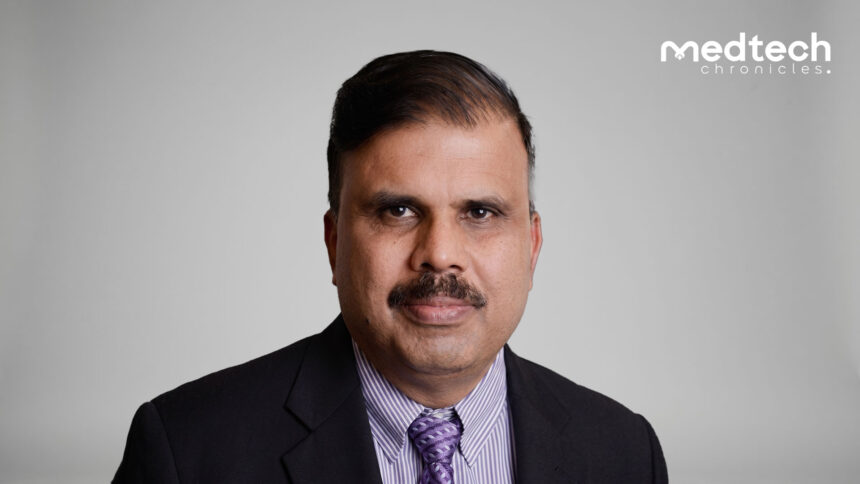
At the center of this push to make biology computable is Pradeep Palazhi, the Founder, President, and CEO of ThinkBio.Ai, Inc. Palazhi is a seasoned entrepreneur with more than 34 years of diverse business and operational experience spanning multiple high-tech industries. Throughout his career, he has built a deep understanding of healthcare systems, genomics, precision medicine, synthetic biology, enterprise software-as-a-service (SaaS), and financial technology.
Before launching ThinkBio.Ai, Palazhi founded or held critical leadership and operational roles in several successful businesses and platforms, including Loyale Healthcare, ePAY Healthcare, and Saath. Care, HealthVidvan, CASHNet, American HealthNet, and Calsoft. These previous experiences allowed him to master the art of designing large-scale software platforms, navigating strict regulatory environments, and managing extensive solutions organizations across the United States, the United Kingdom, and India.
Palazhi’s broad operational background gives him a unique advantage as an executive. He understands how to bridge the gap between complex science, advanced cloud computing, and commercial business models. His transition into digital biology represents a natural step forward, applying modern big data and digital tools to solve the ultimate puzzle: human biology.
The Passion to Address Significant Healthcare Challenges
Palazhi’s personal motivation to build ThinkBio.Ai comes from a clear observation of how modern healthcare operates. Over his decades working in and around the medical and technology sectors, he saw that while technology had completely transformed sectors like retail and finance by making them deeply data-driven, medicine remained held back by manual processes and disconnected systems.
He recognized that standard healthcare models focused primarily on reacting to diseases after they appeared, rather than predicting and preventing them based on a patient’s specific genetic and biological makeup. Palazhi realized that to achieve the true promise of precision medicine, delivering the right treatment to the right patient at the exact moment, the industry required a fundamental shift in how it processed biological data.
He was driven by the core belief that biology should be fully predictable, transparent, and actionable. This philosophy became the foundation of his venture: creating an advanced, centralized intelligence engine that would allow scientists and doctors to harness the transformative power of the current “BioWave” and AI revolution to improve patient care and overall quality of life.
Developing a Unified Intelligence Ecosystem
ThinkBio.Ai, Inc. was formally founded in 2024. Headquartered in California, USA, the company quickly established a global presence, assembling a highly specialized team of over 420 employees across office locations in the United States, India, and the United Kingdom. Palazhi intentionally structured the organization as a highly collaborative, cross-functional ecosystem, recognizing that solving biological data problems requires combining insights from multiple scientific and technical fields.
The company’s leadership team brings together a unique blend of deep industry expertise. Alongside Palazhi, the governance and senior executive board features prominent industry figures, including Co-founder and Chairman Dan Peterson (who previously led Loyale Healthcare through a successful exit), Co-founder Sam Santhosh (a genomics pioneer and founder of MedGenome), Chief Financial Officer Kevin Fleming, Chief Legal Officer Michael Evans, and Chief Scientific Officer Amitabha Chaudhuri, PhD. This core team bridges the gap between deep biological science and heavy software engineering.
To turn their collective knowledge into a scalable asset, ThinkBio.Ai has built a diverse portfolio of AI model-driven platforms, products, and intelligence applications, safeguarded by 15 in-process patents and 30 trademarks. These advanced platforms function as a continuous flywheel designed to move discoveries smoothly from the lab directly to real-world patient care:
- Integrate: Bringing together multi-omics, medical imaging, clinical findings, and real-world data in a unified, secure context that strictly preserves data privacy and underlying scientific meaning.
- Reason: Applying domain-trained AI foundation models to interpret biological systems, uncover underlying disease mechanisms, and validate hypotheses across multiple scales.
- Translate: Turning scientific insight into clinical relevance by linking discoveries directly to real-world patient outcomes and targeted patient care.
Overcoming Operational Silos Across Global Markets
Building a global digital biology enterprise requires addressing significant operational hurdles. One of the main challenges ThinkBio.Ai addressed from its inception was data harmonization. Because data originates from separate clinics and international research centers, it arrives in completely different formats, quality levels, and compliance standards. ThinkBio.Ai invested heavily in building robust systems that automate the collection and cleaning of this messy data, transforming it into a secure, unified format without losing vital scientific details.
Furthermore, because the company deals with highly sensitive patient records, compliance and data security are non-negotiable requirements. To address this, the firm developed its platform architecture with an absolute focus on security, giving clients the tools to process large datasets without violating strict regulatory frameworks.
This focus on reliable, secure engineering has driven strong market adoption. ThinkBio.Ai has already built a proven track record, delivering its tailored products, services, and solutions to over 50 clients globally, including Fortune 500 global companies. Rather than remaining an abstract research project, the business operates as an active, practical intelligence and technology partner for leading organizations in the areas of biotech, pharmaceutical research, and community healthcare.
A Comprehensive Suite of Specialized AI Platforms
ThinkBio.Ai’s market presence is built upon its suite of core software platforms, each engineered to address specific bottlenecks across the pharma and healthcare value chains:
- The BioThinkHub® & BioTData: The underlying biological data platforms are designed to aid in the analysis of vast amounts of genetic, biological sample, and multi-omic data using AI foundation models to accelerate improved complex disease management.
- Saath & HxCentral: AI-driven solutions explicitly focused on patient care management, clinical operations, and elevating the overall patient experience.
- ClinHelper & HealthVidvan: Advanced data analysis and decision support systems powered by AI models, built to guide the next generation of precision medicine and clinical research.
- IntegratorHub & ThinkBoard: High-performance platforms created for comprehensive data integration, analytics dashboards, and delivering predictive insights through advanced data visualizations.
- TCompliance: A dedicated product offering designed to manage certification and handle complex regulatory compliance workflows smoothly.
Through these combined systems, the company addresses major challenges from early discovery and preclinical stages (such as target prioritization and therapeutic no-go decisions) up through clinical research and translational medicine (including disease modeling, patient digital twins, cohort selection, and drug repurposing).
Leading with Collaboration and Technical Rigor
Pradeep Palazhi’s leadership style is defined by a focus on purpose, cross-border collaboration, and technical execution. He understands that while speed is highly valued in traditional software development, the healthcare and biotechnology sectors require absolute precision, transparency, and safety. Because human lives are ultimately impacted by the company’s software output, Palazhi emphasizes a balanced approach where computational power never outpaces deep biological validation.
His leadership is also reflected in how he manages geographically distributed teams. By leveraging his extensive business connections across the US, UK, and India, Palazhi has successfully connected regional software engineering hubs with premier Western life science markets. He excels at assembling high-performance development teams and breaking down professional silos, ensuring that software engineers, big data architects, and computational biologists talk to each other daily. This collaborative, multidisciplinary environment allows ThinkBio.Ai to execute its long-term growth plans while staying completely aligned with strict global regulatory standards.
Setting the Standard for Precision Medicine
Looking ahead, the future of ThinkBio.Ai is centered on expanding its footprint as a category leader in computable biology. Under Palazhi’s guidance, the corporation aims to continue scaling its platforms to make advanced AI tools highly accessible for small to mid-sized biotechs, while continuing to serve as a high-capacity engineering partner for large pharmaceutical enterprises and research institutions.
As next-generation sequencing and spatial biology continue to evolve, ThinkBio.Ai is positioning its platforms to handle increasingly complex data layers. By automating data collection, streamlining research workflows, and lowering the high technical barriers associated with machine learning, the company is shifting medicine away from traditional, reactive trial-and-error treatments. The company’s long-term journey reflects a broader transformation in human healthcare, a future where biological complexity is translated into digital clarity, bringing personalized, accurate, and accessible precision medicine to real-world care.