

The definition of a world-class healthcare ecosystem has fundamentally shifted. Elite medical centers are no longer just places of healing; they are dense configurations of artificial intelligence, complex telemetry, and massive data integration. Yet, as cutting-edge hospitals deploy predictive algorithms and state-of-the-art diagnostics, a critical paradox has emerged: the technology meant to connect us has left the actual patient journey more fragmented than ever. Medical data sits trapped in siloed legacy systems, while patients navigate the terrifying spaces between hospital discharge and home recovery in a digital blind spot.
True innovation in medicine is not just about building smarter machines within hospital walls; it is about extending that intelligence seamlessly into the daily lives of patients. This requires a shift from reactionary, episodic treatment to continuous, unified care. At the center of this movement is a philosophy that views technology not as a replacement for human touch, but as its digital amplifier. By transforming fragmented medical workflows into a singular, interactive ecosystem, the modern healthcare journey can finally become what it was always meant to be: continuous, deeply personalized, and profoundly human.
The Chaos of Fragmented Clinical Data
In the current global healthcare landscape, clinical excellence is frequently undermined by operational fragmentation. When a patient leaves a physical medical facility, they enter a chaotic informational vacuum. The data generated during their stay remains locked behind the proprietary firewalls of Electronic Health Records (EHR) and localized hospital information systems. Meanwhile, the patient is handed a stack of paper instructions, ambiguous medication schedules, and manual symptom-tracking logs.
For chronic disease management, oncology, and post-operative recovery, this disconnect is dangerous. Without real-time data flow between the patient at home and the clinical team in the hospital, early signs of health deterioration go unnoticed. This leads to preventable emergency room readmissions, compromised clinical trials, and immense administrative burnout for medical staff who must manually piece together patient histories.
The industry does not need more standalone health apps that track isolated metrics. It requires a fundamental orchestration layer, a single, compliant platform capable of translating disparate data points into actionable, continuous clinical workflows.
An Experienced Innovator Takes the Lead
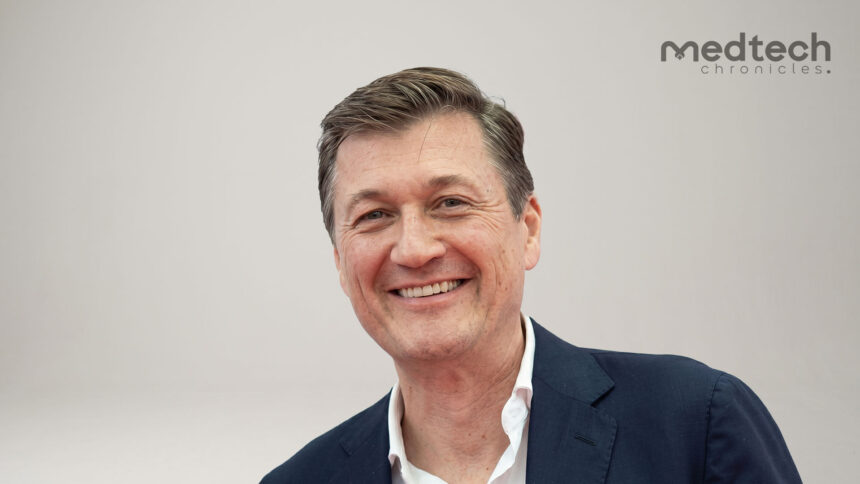
Stepping directly into this systemic void is Christian Hieronimi, the Founder and CEO of ONCARE GmbH. Positioned at the intersection of advanced software engineering and holistic medical care, Hieronimi has dedicated his professional life to dismantling the barriers that isolate medical data. Based in Munich, Germany, his leadership has propelled the company’s core platform, myoncare, from a visionary startup concept into a critical piece of digital health infrastructure adopted by leading medical institutions and pharmaceutical enterprises across Europe.
Hieronimi does not view digital health through the sterile lens of pure software metrics. He approaches technology as a serial tech entrepreneur with decades of deep sector experience. Before establishing ONCARE GmbH in 2015, Hieronimi successfully built and scaled multiple pioneering technology ventures, including Medical Intelligence GmbH (a medical robotics firm later sold to Elekta) and humediQ (a patient safety technology venture acquired by Varian). This rich pedigree in medical hardware and enterprise software gave him a profound understanding of how to build digital infrastructure that scales seamlessly within highly regulated environments.
A Mission Born From Healthcare Friction
Every transformative technology is born from a moment of profound friction. For Hieronimi, the motivation to revolutionize healthcare communication did not stem from a casual commercial interest, but from a direct confrontation with the systemic failures of traditional medicine. Throughout his earlier career in medical robotics and patient safety, he witnessed firsthand how the lack of structured communication channels between distinct medical specialties, and between doctors and patients, directly compromised patient safety and peace of mind.
He recognized that medical professionals were trapped in a system that forced them to fight against their own tools. Doctors and nurses enter healthcare to care for people, yet they spend a staggering percentage of their shifts navigating clumsy documentation pipelines and disparate communication tools. Hieronimi realized that if you fix the workflow, you free the clinician. This core realization shifted his trajectory away from localized hardware installations toward building a comprehensive, cloud-based platform that standardizes the medical journey, ensuring that no patient feels abandoned after walking out of a clinic door.
Engineering the Central Nervous System of Care
Building myoncare required overcoming deep-seated industrial skepticism. The healthcare sector is notoriously risk-averse, burdened by legacy software contracts, and protected by incredibly stringent regulatory frameworks. Hieronimi steered the company away from the trend of building quick, flashy wellness apps. Instead, he focused on creating a robust, medically certified Digital Health Platform (DHP) capable of managing complex, multi-sectoral care pathways.
The architectural philosophy behind myoncare relies on complete configuration flexibility. Recognizing that an oncology pathway looks entirely different from an orthopedic rehabilitation program, Hieronimi and his team designed a modular Content Management System (CMS). This system operates without requiring programming knowledge, enabling clinical teams to customize care plans, dictate automated alerts based on patient biometric data, and push personalized educational content directly to a patient’s smart device. By ensuring the platform seamlessly integrates with existing hospital information frameworks, myoncare turned potential software rivals into natural infrastructure allies.
Overcoming Regulatory Hurdles and Driving Adoption
The path of a digital health pioneer is rarely smooth. For myoncare, the primary challenges were not merely technical, but regulatory and cultural. Operating in Germany and the wider European market meant navigating the strict rollout of the Medical Device Regulation (MDR) and maintaining absolute compliance with GDPR data privacy standardization. While many digital health startups collapsed under the weight of these rigid compliance standards, Hieronimi viewed them as a competitive advantage.
Under his leadership, the platform achieved rigorous MDR Class IIa certification and FDA approval, meeting international quality management benchmarks like ISO 13485 and ISO/IEC 27001 for information security. Beyond regulation, Hieronimi had to fight the cultural inertia inherent in traditional medical hierarchies. Convincing busy clinicians to adopt a new digital workflow required proving immediate, undeniable utility. Myoncare achieved this by demonstrating a measurable drop in documentation times and a significant reduction in unnecessary patient visits, winning over clinical teams through practical operational relief.
Setting the Gold Standard for Decentralized Medicine
Today, Christian Hieronimi is recognized as a prominent voice in the European digital health landscape. His expertise centers on a clear principle: true digital medicine must be decentralized, continuous, and cooperative. He frequently challenges the healthcare industry to move past basic teleconsultations and embrace comprehensive digital therapy management.
Under his leadership, the company has expanded its footprint far beyond simple remote monitoring. In 2022, he founded myon. clinic GmbH to specialize in full-service digital medical content, followed by the 2023 creation of myon.coach GmbH, a specialized joint venture with the Association of Practicing Cardiologists (BNK) aimed at directly improving regional cardiological care networks. The platform is now utilized to track complex pharmaceutical therapies, manage clinical trials with real-world evidence, and coordinate cross-sectoral care networks where primary care doctors, specialized clinics, and therapists all operate on a singular, shared patient timeline.
Fostering a Culture of Purpose-Driven Alignment
To build a platform that humanizes healthcare, Hieronimi has fostered an internal company culture at ONCARE that balances engineering precision with deep empathy. He rejects the traditional “move fast and break things” Silicon Valley methodology, recognizing that in the medical tech space, “breaking things” directly compromises human lives. Instead, his leadership style is defined by calculated innovation, transparency, and collaborative problem-solving.
He maintains a highly collaborative, international team structure where computer scientists, data security experts, and public health advisors work in tandem. This ensures that those writing the code deeply understand the real-world pressures of a nurse working a night shift or a patient managing a stressful chronic diagnosis. By anchoring the internal culture in actual clinical utility, Hieronimi ensures that every update, feature, and integration serves a clear purpose: improving the delivery of human care.
Expanding the Horizon of Networked Global Health
As healthcare moves further into the digital age, the foundations laid by Christian Hieronimi and the myoncare platform are becoming more vital than ever. The future of medicine lies in predictive, continuous assistance, where the boundaries between the hospital and the home dissolve entirely.
Looking ahead, the company is actively focused on broader internationalization, expanding its specialized medical indications, and scaling its digital orchestration layer across global markets. By incorporating advanced data interfaces and sensor data, myoncare aims to help clinicians spot health risks before they turn into medical emergencies. For Hieronimi, the ultimate goal remains unchanged: building a world where technology works quietly and efficiently in the background, handling data and automating workflows, so that doctors and patients can focus entirely on what truly matters: the journey of healing.