


Turning Nuclear Science into Targeted Cancer Therapy
Most cancer treatments face a frustrating paradox. To kill the tumor, doctors must flood the body with toxic chemicals or blast large areas with radiation, accidentally destroying healthy tissue in the process. For decades, oncologists have chased the dream of a true “magic bullet”, a therapy that travels directly to a cancer cell, locks onto its unique surface, and delivers a lethal blow without harming surrounding organs.
Today, a revolutionary field called radiotherapeutics is turning this dream into a reality. By pairing radioactive isotopes with precision-guided molecules, scientists can destroy tumors from the inside out.
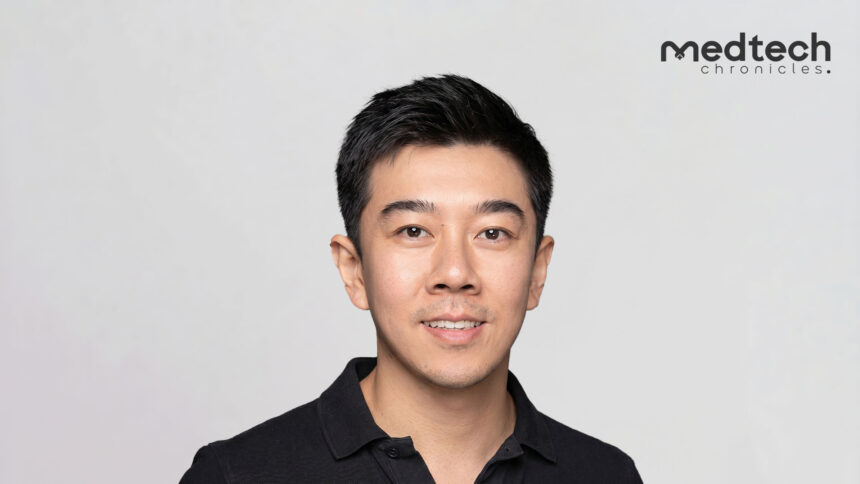
At the forefront of this global medical shift is Lanny Sun, the Co-founder, Chairman, and CEO of Full-Life Technologies. Under his guidance, Full-Life Technologies is not just inventing new cancer medicines; it is building a global, vertically integrated empire designed to control every step of the radiopharmaceutical pipeline, from laboratory discovery to complex nuclear logistics.
The Logistics Nightmare of Nuclear Medicine
The radiopharmaceutical sector is experiencing an unprecedented boom, but it is deeply troubled by a severe operational bottleneck. Unlike traditional pills that can sit on pharmacy shelves for months, radiopharmaceuticals have a ticking clock built into their very biology. They are created using radioactive isotopes that decay by the minute.
This short physical half-life means that a dose of medicine must be manufactured, checked for quality, shipped across international borders, and injected into a patient’s arm within a window of just a few days or hours. If a flight is delayed or a customs line stalls, the medicine literally vanishes into thin air, rendering it completely useless.
Furthermore, the industry is shifting from beta-emitting isotopes like Lutetium-177 to highly potent alpha-emitters like Actinium-225. Alpha particles deliver massive amounts of energy over a microscopic distance, destroying cancer DNA while sparing healthy cells just a few layers away.
However, global supplies of Actinium-225 are dangerously scarce. Most biotechnology startups design brilliant drugs but have no way to manufacture them or secure the raw materials. They are entirely dependent on a fragile, third-party supply chain that frequently collapses.
A Seasoned Architect of High-Barrier Biotechnology
Lanny Sun did not enter this complex arena by accident. He is a highly strategic life sciences executive with a distinct track record of launching and scaling companies characterized by exceptionally high technical barriers to entry.
Sun earned a Bachelor of Science in Economics from Trinity College-Hartford, laying an analytical foundation that initially led him to investment banking at Deutsche Bank. He later transitioned into venture capital, where he serves as a Partner and Chief Investment Officer at Gordian Ventures, a prominent venture firm that specializes in deep-tech life science incubations.
Sun’s true calling emerged when he stepped into the role of entrepreneur. He co-founded Silicon Therapeutics, an innovative company that fused physics-based computation with drug discovery. As CEO, he navigated the company through its early phases and eventual scaling, culminating in a landmark $450 million upfront equity acquisition by Roivant Sciences, which included extensive downstream milestone provisions.
Instead of stepping back after this massive commercial success, Sun recognized a massive, unaddressed opportunity in the radiopharmaceutical landscape. He realized that the companies succeeding in the next decade would not be those with just a smart lab concept, but those capable of mastering production and logistics. In 2021, he teamed up with co-founders Hong-hoi Ting and Nicholas Wong to launch Full-Life Technologies.
Redefining Molecular Longevity
The name “Full-Life Technologies” is a deliberate, poignant play on the nuclear physics concept of a “half-life”, the time it takes for half of a radioactive substance to decay. While the isotopes driving their therapies break down rapidly, the ultimate goal of the company is to grant cancer patients a “full life.” This core mission bridges the clinical precision of nuclear medicine with an empathetic focus on human survival.
Sun was deeply motivated by the fact that many advanced cancer patients exhaust all traditional lines of therapy, such as chemotherapy and external beam radiation. He saw that radiopharmaceuticals offered a profound beacon of hope, but only if a company could overcome the manufacturing vulnerabilities that kept these treatments out of reach for the average patient.
His vision was clear: build a global company operating simultaneously in the top biotech hubs of Europe and Asia, ensuring that geographic borders would never bottleneck the delivery of life-saving medicine.
Engineering an End-to-End Nuclear Pipeline
To realize his ambitious vision, Sun steered Full-Life Technologies away from the traditional, asset-light biotech model. Instead, he chose a path of deep vertical integration. Full-Life positions itself as a company that aims to own the entire value chain, spanning discovery, translation, clinical development, GMP (Good Manufacturing Practices) production, and supply chain logistics.
The company’s scientific engine is its proprietary UniRDC™ platform. This discovery ecosystem streamlines the creation of Radionuclide Drug Conjugates (RDCs). By utilizing synthetic chemistry and advanced protein engineering, including its unique Clear-X™ linker technology and Res-X™ modification methods, the platform optimizes how well a drug binds to a tumor while accelerating its clearance from healthy tissues.
The UniRDC™ platform compresses the timeline from initial target identification to a fully validated development candidate with human data down to 18 months or less.
Securing Capital and Constructing the Fortress
Building a fully integrated global nuclear medicine company requires immense capital and flawless operational execution. Sun has proven exceptional at securing both. Under his leadership, Full-Life Technologies has executed a continuous cadence of high-profile, multi-million-dollar funding rounds.
The company successfully closed a massive $150 million Series D financing package, consisting of $110 million in equity and $40 million in venture debt, led by major global healthcare investors like Vivo Capital, with crucial participation from SK Biopharmaceuticals and Chengwei Capital. This landmark transaction raised the company’s total funding past $350 million since its 2021 inception.
Sun directed these funds toward solving the industry’s biggest vulnerability. Full-Life broke ground on a state-of-the-art, 4,000-square-meter GMP-level radiopharmaceutical manufacturing facility in Gembloux, Belgium.
Situated in a key European biotech corridor on a 17,000-square-meter site, this facility is designed to produce a broad spectrum of radiopharmaceuticals, explicitly targeting commercial-scale production of Actinium-225. By anchoring production in Europe and keeping corporate and R&D roots globally distributed, Sun effectively insulated the company from localized supply chain disruptions.
Advancing a Powerful Clinical Portfolio
The ultimate proof of Sun’s strategy lies in the rapid progression of Full-Life’s clinical pipeline. The company’s portfolio features several standout assets that have moved swiftly from bench to bedside:
- [225Ac]-FL-020: This is the company’s lead, potentially best-in-class therapeutic candidate targeting Prostate-Specific Membrane Antigen (PSMA) for patients with metastatic castration-resistant prostate cancer (mCRPC). Discovered via the Clear-X™ platform, it exhibits intense tumor uptake and rapid systemic clearance. It received U.S. FDA Investigational New Drug (IND) clearance to advance into global Phase I clinical trials.
- [225Ac]-FL-261: A potential first-in-class alpha-emitting radiotherapeutic designed to target multiple solid tumor indications, expanding the reach of RDCs beyond traditional prostate and neuroendocrine targets.
- FL-091: A highly promising asset targeting Neurotensin Receptor Type 1 (NTSR1), which is overexpressed in colorectal, pancreatic, and prostate cancers.
Demonstrating the immense commercial and scientific value of their pipeline, Sun successfully negotiated a major global licensing agreement for FL-091 with SK Biopharmaceuticals. The deal is worth up to $571.5 million in upfront and milestone payments, plus future royalties, validating Full-Life’s discovery capabilities on the world stage.
Uniting Entrepreneurs and World-Class Scientists
Lanny Sun’s leadership style is defined by a rare combination of venture capital foresight and flat, entrepreneurial execution. He balances a macro-level understanding of market opportunities with a deep respect for strict regulatory and scientific boundaries. Rather than acting as a traditional, detached corporate executive, Sun is known for constructing high-performing, cross-functional teams where business leaders and nuclear scientists work side by side.
He has masterfully populated Full-Life’s C-suite with preeminent industry veterans. A prime example is Chief Scientific Officer Dr. Fa Liu, an expert who previously led peptide discovery at Novo Nordisk and Eli Lilly, establishing modern therapeutic chemistries.
Sun also brought on board Chief Medical Officer Dr. Debora Barton, an expert who previously led the successful clinical and regulatory strategy for Lutathera® at Advanced Accelerator Applications, leading to its acquisition by Novartis. By surrounding himself with leaders who have successfully brought radiopharmaceuticals to market, Sun fosters a corporate culture that values speed, regulatory compliance, and a shared dedication to patient outcomes.
Leading the Next Wave of Precision Oncology
As Full-Life Technologies marches deeper into late-stage clinical trials and operationalizes its Belgian manufacturing fortress, Lanny Sun is successfully shifting the company from a promising platform builder into a commercial-stage powerhouse. The global radiopharmaceutical market is projected to grow exponentially over the coming decade, and Full-Life is uniquely positioned to dominate a significant portion of it.
By solving the dual problems of rapid drug discovery and highly complex manufacturing logistics, Sun has built a resilient business model that few competitors can replicate. His forward-looking approach ensures that as alpha-emitting therapies become the gold standard in cancer care, Full-Life Technologies will not just be a participant in the market; it will be the vital engine keeping the global supply chain moving, ultimately delivering on the profound promise of turning radioactive half-lives into full, vibrant human lives.