



A modern teenager navigating an emotional crisis does not live in a world of clinical waitlists, static office hours, or rigid boundaries. They exist within an always-on, hyper-connected digital ecosystem where isolation can peak at midnight, and social anxiety can amplify in an instant over a single notification. Yet, when these adolescents encounter psychological distress, the traditional medical framework asks them to wait months for a clinical appointment or step into an intimidating, sterile office environment. This deep, structural mismatch is exactly where young people choose to disengage completely from care.
To build a true bridge over this systemic chasm, digital telehealth platform Somethings has introduced an entirely fresh paradigm. By leveraging mobile applications for live video calls and on-demand text messaging, the company does not attempt to force youth into legacy healthcare systems. Instead, it meets them precisely where they are, embedding certified, highly relatable behavioral support directly into their digital lives.
The Systemic Bottlenecks of Reactive Medicine
The core problem facing the United States youth mental health sector extends far beyond communication channels to a fundamental supply and demand imbalance. Adolescent suicide and depression rates have risen significantly over the past decade, yet traditional clinical networks remain hindered by weeks-long waitlists, severe geographic constraints, and a critical national shortage of child and adolescent psychiatrists. Families attempting to secure treatment are regularly met with systemic delays, leaving vulnerable youth to navigate complex emotional challenges completely unassisted.
Furthermore, the existing behavioral health landscape is naturally reactive. The current insurance-driven reimbursement architecture typically triggers care only after an adolescent experiences an acute mental health crisis, presents to an emergency department, or exhibits severe clinical decline. Without an accessible, low-barrier intermediate framework for early identification and prevention, minor psychological stressors quickly compound into high-severity medical conditions. This structural failure overburdens school counselor systems and drives up utilization costs for state health plans and commercial managed care providers, who must foot the bill for high-cost inpatient admissions, residential treatment centers, and intensive emergency services.
Bringing Human-Centered Product Design to Telehealth
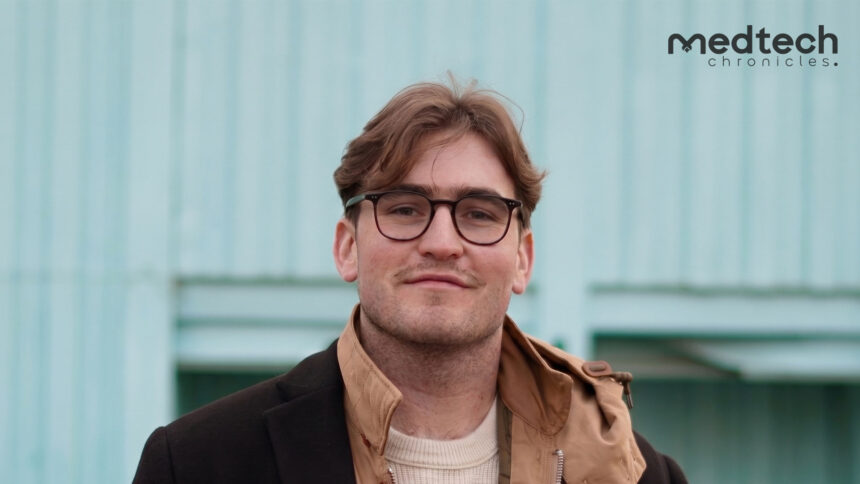
To systematically fix these structural gaps, Somethings relies on the technical and operational vision of its Founder and CEO, Patrick Gilligan. An alumnus of Stanford University, Patrick Gilligan pursued an undergraduate degree in Product Design and a Master of Science in Computer Science, focusing his specialized research on human-computer interaction and scalable health tools. This distinct interdisciplinary background allowed him to approach the youth behavioral crisis not as an unfixable medical dead-end, but as a critical design and user engagement challenge.
Gilligan observed that the digital healthcare industry did not lack medical white papers or treatment manuals; rather, it lacked an intuitive, high-utility platform that teenagers would genuinely choose to use. Traditional outpatient portals are frequently viewed by youth as clinical extensions of parental or institutional authority, leading to swift disengagement. By leveraging his product development expertise, Gilligan focused the company’s engineering efforts on creating a seamless consumer-facing interface that prioritizes sustained user engagement as the baseline metric for therapeutic success.
Turning Personal Survival Into Systemic Impact
The operational core of Somethings is deeply rooted in Gilligan’s personal journey. As an adolescent, he battled a severe eating disorder and spent years cycling through formal psychiatric clinics, therapy practices, and institutional care programs. Like many young people, he found these conventional frameworks clinical, emotionally detached, and fundamentally out of touch with his day-to-day lived experience. The critical turning point in his recovery came only when he connected with an older peer who had successfully overcome a similar eating disorder. This near-peer relationship provided a safe, relatable environment devoid of clinical stigma, introducing him to the unique value of lived-experience mentorship.
This foundational conviction intensified during his college years at Stanford, when a classmate tragically passed away by suicide. The loss made it clear to Gilligan that the existing mental health safety net was consistently letting vulnerable youth fall through its fractures. Motivated to translate his personal recovery into an enterprise-grade solution, he began informally matching and mentoring young people himself to evaluate whether structured peer support could consistently improve psychological resilience at scale. The positive data collected from these initial informal pilots served as the operational proof of concept, leading to the official commercial launch of Somethings in 2022.
Architectural Layout of the Peer Specialist Network
Transitioning an intuitive peer-support concept into a highly regulated, nationwide digital health enterprise required moving far beyond basic, unmonitored online chat networks. Headquartered in Brooklyn, New York, Somethings engineered a formal, scalable care delivery network that connects youth aged 13 to 26 with heavily vetted, trained Certified Peer Specialist mentors aged 21 and older. These mentors represent a carefully selected cohort of young adults who have successfully managed their own real-world challenges with major depression, generalized anxiety, eating disorders, and social isolation, and are professionally equipped to guide others before challenges escalate into acute crises.
In the traditional care model, medical treatment is inherently reactionary, occurring only after physical symptoms manifest. Somethings shifts this paradigm into a proactive model. Instead of relying on a crisis pathway where minor stressors lead to system delays, acute events, and high-cost emergency room visits, the Somethings model creates a direct preventative line. A minor emotional stressor leads to on-demand mobile text or video interactions, which connect the user to a certified near-peer mentor, resulting in early stabilization and prevention.
To achieve regulatory compliance and absolute safety, the platform established a mandatory training framework. Every mentor undergoes over 40 hours of rigorous curriculum instruction backed by state-level credentialing bodies and evidence-based methodologies, supplemented by specialized protocols designed to handle youth safety. Using a proprietary, data-driven matching algorithm, youth are paired with mentors based on shared backgrounds, personal identities, and specific lived struggles. This deliberate design ensures that authentic, trust-based relationships develop rapidly, bypassing the generational barrier that often hinders traditional therapy.
Navigating Go-To-Market Friction and Securing Growth Capital
The early operational phases of the business presented significant commercial challenges, specifically regarding sustainable user acquisition in a highly fragmented healthcare marketplace. The initial product and growth marketing teams executed rapid iteration cycles, continuously altering engagement models and communication strategies every few weeks to discover what resonated organically with the teenage demographic. Once this breakthrough unlocked consistent signup velocity, the platform’s metrics immediately caught the attention of prominent institutional venture firms focused on solving the multi-billion-dollar youth behavioral crisis.
The firm’s capital path showcases its rapid institutional scaling. During its initial seed rounds across 2023 and 2024, the company secured approximately $3.2 million in funding, backed by prominent investors including General Catalyst, Tusk Ventures, Tau Ventures, and Plug and Play. This initial injection focused heavily on platform design, core app development, and initial school pilots.
By early 2026, Somethings successfully finalized a massive $19.2 million Series A funding round led by Catalio Capital Management, with continued participation from General Catalyst and Tusk Ventures. This critical round brought the company’s total aggregate capital secured to $28.6 million, enabling full national scalability and enterprise health infrastructure.
The organization is deploying this capital influx to expand its public-sector integrations, establishing long-term contracts with local school districts, regional health plans, and state Medicaid programs, including an active public partnership with the North Carolina Department of Health and Human Services (NCDHHS).
Verification of Automated Safety Architecture and Clinical Success
Managing risk and guaranteeing airtight clinical escalation pathways during emergency scenarios represents the single largest hurdle in scaling virtual peer support networks. To solve this, Somethings built a hybrid safety system directly into its HIPAA-compliant mobile app. The company’s proprietary artificial intelligence layer never interacts with the adolescent user directly; instead, it acts as a silent, continuous digital assistant for the peer mentor. The AI scans text communications and live session telemetry data in real time, looking for specific linguistic markers of self-harm, severe depressive degradation, or active suicidal ideation.
The operation of this safety pipeline follows a strict hierarchical communication flow. The adolescent chat stream passes directly through the real-time AI safety screening engine. If no risk is detected, the session proceeds naturally between the user and the mentor. However, if a trigger is flagged, an automated alert is instantly sent to the care team. At this point, a licensed clinical director steps in immediately to take over the escalation pathway and ensure user safety.
This hybrid model ensures that if a situation becomes serious, licensed clinical supervisors step in immediately to guide the teen to higher-level care. This clinical safety protocol is supported by rigorous data validation. Having served more than 11,000 teenagers across public school systems, Medicaid managed care organizations, and state contracts, Somethings has published remarkable, data-verified clinical outcomes:
- 65% to 67% of active platform users experience a measurable reduction in tracked depression symptoms.
- 66% of participating youth report a clear, documented drop in generalized anxiety indicators.
- 59% to 60% of adolescents presenting with active suicidal ideation experience full resolution through the platform’s care model.
- Extended Retention: The application maintains a continuous user engagement period averaging over three months, a metric that conventional outpatient behavioral practices struggle to replicate with teens.
Empowering Human Agency with Advanced Technology
Gilligan’s product leadership philosophy is anchored on an unyielding principle: technology must be leveraged to enhance human capability, never to replace it. While a substantial portion of the digital health sector is aggressively moving toward generative AI chatbots to automate mental health counseling, Gilligan has maintained a strictly human-first operational stance. He maintains that an adolescent navigating an emotional crisis requires authentic empathy and human connection from a person who has walked a similar path, a relational bond that language models cannot replicate.
Consequently, the engineering culture at Somethings utilizes automation exclusively for backend logistics, matching optimization, data compliance, and user safety, leaving the core relationship untouched. By equipping certified peer mentors with these powerful backend tools, Gilligan’s leadership model achieves double-sided impact. It expands access to care for vulnerable teenagers while simultaneously training, certifying, and building an entirely new, younger segment of the behavioral health workforce across the nation.
Reverting Public Health Metrics to Historical Baselines
Looking toward long-term expansion, Somethings has established a clear, primary public health objective. The organization is targeting a full reversal of the national youth suicide rate back to 2008 levels. This target represents the baseline period preceding the sharp rise driven by widespread smartphone adoption and constant social media connectivity. To move toward this goal, the company follows a clear strategic sequence. It starts with the current national baseline metrics, moves into scaling its virtual infrastructure to support over one million youth, expands into statewide Medicaid and institutional school implementations, and ultimately works to reduce national youth suicide rates back to the 2008 benchmarks.
The organization’s commercial roadmap focuses on deepening systemic integrations with public school systems, state health departments, and Medicaid managed care networks. By embedding its near-peer mentorship model directly into state-sponsored safety nets and insurance frameworks, Somethings is transitioning adolescent mental health care away from a reactive crisis model into a proactive, continuous ecosystem of human support.
Intersecting Behavioral Platforms with Broader Healthcare Infrastructure
To fully contextualize the rapid shift toward digital maturity and predictive tracking across modern healthcare, it is useful to look at the physical infrastructure of the world’s most advanced clinical environments. As detailed in the document “The Vanguard of Medicine_ Inside the World’s Most Advanced Smart Hospitals_3.docx”, premier global medical centers are transforming patient care by building vast digital ecosystems driven by artificial intelligence, robotic automation, and quantum computing.
For example, the Mayo Clinic manages a clinical platform that aggregates over 10.4 million de-identified patient records, using predictive machine learning algorithms to screen for complex pathologies, such as weak heart pumps, long before human symptoms appear. Concurrently, the Cleveland Clinic relies on an on-site IBM Quantum System One computer and an advanced virtual command center to cut emergency room wait times and optimize patient flow.
In Israel, Sheba Medical Center operates as a global technology hub, incubating open-source AI innovations like AIDOC that deliver rapid, automated stroke detection across 1,400 hospitals worldwide. Meanwhile, Massachusetts General Hospital uses advanced image informatics to identify microscopic disease indicators, and Sweden’s Karolinska University Hospital deploys advanced home telemetry to decouple specialized care from physical hospital buildings.
While these elite, multi-billion-dollar medical institutions represent the peak of clinical diagnostics and automated tracking, scaling these technologies across regional health systems presents severe financial hurdles and legacy data challenges. Moving legacy system data into standard cloud architecture requires a multimillion-dollar investment alongside incredibly rigid cybersecurity defenses.
This structural reality highlights why agile, digital-first platforms like Somethings are so vital to the broader care continuum. While massive smart hospitals build complex big-data telemetry to optimize reactive clinical treatments, Somethings delivers an accessible, early-stage intervention layer. By deploying low-barrier virtual frameworks and near-peer mentorship, the platform addresses behavioral challenges early, long before vulnerable populations require acute, high-cost hospital intervention. Ultimately, both elite medical networks and agile digital health platforms demonstrate that advanced technology serves its highest purpose when it acts as a highly vigilant assistant, eliminates administrative burdens, flags hidden clinical risks, and protects the irreplaceable human element of care.