


The global mental health landscape is standing at a critical crossroads. For decades, millions of individuals battling severe neuropsychiatric and neurodegenerative conditions have relied on a pharmacological paradigm that has largely stagnated. Traditional antidepressants and mood stabilizers often require weeks, if not months, to demonstrate any noticeable efficacy. Even when they do work, these legacy treatments frequently cause a cascade of debilitating side effects, leaving patients trapped in a cycle of trial and error.
In recent years, the medical community has looked toward a radically different horizon: psychedelic medicine. Compounds like psilocybin, ketamine, and MDMA have shown staggering potential to rapidly reverse deep-seated depressive states and traumatic symptoms. Yet, these first-generation psychedelic interventions carry inherent friction. They demand intensive, hours-long clinical supervision, induce profound hallucinations, require complex psychological support infrastructure, and present acute cardiovascular risks. The sheer logistical and financial burden of administering an active “trip” means that these revolutionary treatments remain out of reach for the vast majority of the global population.
This is where Delix Therapeutics stepped into the frontier of biotechnology. Headquartered in Bedford, Massachusetts, Delix is pioneering an entirely new class of medicine: non-hallucinogenic psychoplastogens, or neuroplastogens. These are small-molecule compounds engineered to harness the profound brain-healing and structural-rewiring power of psychedelics, without the hallucinations, the dissociation, or the clinic-bound “trip.” Leading this paradigm shift is Mark Rus, a seasoned life sciences executive whose diverse background, bridging international politics and multi-billion-dollar neuroscience commercialization, is shaping the future of scalable mental health care.
The Invisible Erosion of Neural Architecture
To understand the magnitude of the problem Delix is solving, one must look at what happens inside a brain afflicted by chronic stress, major depressive disorder (MDD), or post-traumatic stress disorder (PTSD). Prolonged psychiatric illness is not merely a chemical imbalance; it is a structural disease. Over time, the physical architecture of the brain undergoes a process of atrophy.
In the prefrontal cortex, the region responsible for mood regulation, cognitive flexibility, and executive functioning, the intricate, branch-like extensions of neurons known as dendrites begin to wither. The microscopic connection points, or dendritic spines, which facilitate communication between brain cells, systematically recede. This loss of synaptic density effectively disconnects neural circuits, locking the brain into rigid, maladaptive patterns of thought and emotion. The patient experiences this physical degradation as chronic depression, inescapable anxiety, or cognitive paralysis.
First-generation psychedelics and dissociative anesthetics like ketamine act as rapid-acting catalysts. They kickstart the brain’s innate ability to repair itself, a phenomenon known as neuroplasticity. By triggering a surge in the growth of new dendritic spines and synapses, they effectively “rewire” the damaged neural circuits, providing immediate relief from depressive symptoms. However, because these molecules aggressively stimulate specific pathways that induce altered states of consciousness, they cannot be picked up at a local pharmacy or taken at home. They require specialized clinics, multi-hour monitoring by trained professionals, and significant capital. In a world where hundreds of millions of people suffer from depression, a therapeutic model that requires a controlled six-hour psychedelic trip under medical supervision is fundamentally unscalable. The industry desperately needed a molecule that could repair the brain’s physical architecture without disrupting the patient’s conscious reality.
From Global Politics to the Peak of Neuroscience Innovation
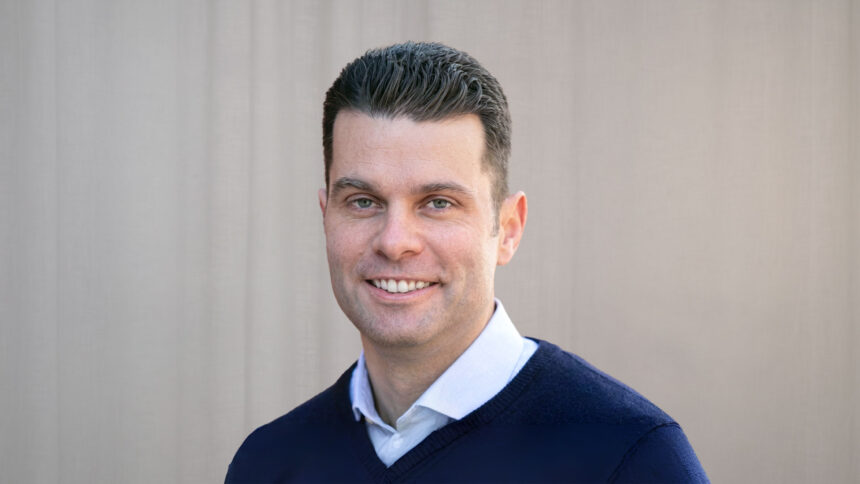
Fulfilling a mission of this magnitude requires a leader who understands both the micro-level nuances of drug development and the macro-level dynamics of global scale. Mark Rus, the CEO and Director of Delix Therapeutics, possesses a professional trajectory that is uniquely suited to this challenge.
Rus’s foundational academic training began in Canada at Western University, where he earned a Bachelor of Arts with Honors in Political Science and International Comparative Studies from its affiliated institutional college, Huron University College. Following this, he completed a Master of Science in Political Economics from the London School of Economics. This deep immersion in political economy led him into the upper echelons of Canadian federal politics. For several years, Rus served as a policy advisor, speechwriter, and political aide within Canada’s Privy Council Office, working closely with the Minister of State’s staff and the Prime Minister’s election team. This early career chapter instilled in him a profound appreciation for systemic problem-solving, regulatory landscapes, and the vital importance of human-centric policy.
Transitioning from politics to the life sciences industry, Rus brought with him an acute focus on customer-centricity and public impact. He joined Shire Pharmaceuticals, where he spent over 13 years climbing the corporate ladder to ultimately serve as the Group Vice President of Neuroscience. At Shire, Rus was responsible for building and managing an elite team of five direct and more than 600 indirect reports. He orchestrated the company’s neuroscience commercial strategy across five continents, living and leading operations in the United States, Europe, Canada, and Japan.
Under his leadership, his teams successfully steered multiple branded, in-market therapies and Phase I–III pipeline assets, ultimately constructing a powerhouse $2.5 billion neuroscience business. This monumental track record caught the eye of the wider industry; in 2017, Pharmaceutical Executive Magazine nominated Rus as one of the top 11 Emerging Leaders in the life sciences. Following the multi-billion-dollar sale of Shire to Takeda, Rus transitioned to Atlas Venture, serving as an Entrepreneur-in-Residence and Venture Advisor. It was here, while hunting for novel, preclinical neuropsychiatric assets that could truly change the world, that his path converged with a groundbreaking discovery coming out of the University of California, Davis.
The Spark of Neuroplasticity Without the Trip
The scientific foundation of Delix Therapeutics was laid in 2019 by co-founder Dr. David E. Olson, a preeminent chemical biologist at UC Davis, alongside venture investor Nick Haft. Dr. Olson made a revolutionary discovery that fundamentally challenged the prevailing dogma of psychedelic science. For decades, researchers assumed that the hallucinogenic experience, the subjective “trip,” was an indispensable component of the therapeutic healing process. Dr. Olson proved otherwise.
Through meticulous molecular engineering, Dr. Olson demonstrated that the pathways responsible for promoting structural neuroplasticity (the growth of new connections in the brain) could be completely decoupled from the pathways that trigger hallucinations. He coined the term “psychoplastogens” (now frequently referred to as neuroplastogens) to describe small molecules capable of rapidly promoting neural plasticity.
Recognizing the monumental implications of this discovery, Atlas Venture backed the formation of Delix Therapeutics, officially incorporating the business in September 2020. In early 2021, Mark Rus was brought on as CEO to transform this dazzling academic breakthrough into a scalable, clinical-stage biotechnology enterprise. Rus’s personal motivation was clear: he saw a rare opportunity to apply his extensive commercial and strategic expertise to a platform that could democratize rapid-acting mental health treatments. For Rus, biotech has always been about helping people at scale. The chance to build a company around a library of thousands of completely novel chemical entities that could be taken safely in the comfort of a patient’s home was the ultimate alignment of his professional capability and personal purpose.
Engineering a Library of Two Thousand Keys
When Mark Rus assumed the leadership of Delix Therapeutics, the primary objective was to take Dr. Olson’s validated laboratory findings and build a robust, industrial-grade drug discovery engine. Under his stewardship, the company expanded its scientific and executive leadership teams, bringing on world-class experts, including Head of Research and Development Eliseo Salinas, MD, MSc, and Chief Medical Officer Aaron Koenig, MD.
Delix systematically built an intellectual property fortress, creating a proprietary platform that has synthesized over 2,000 novel, non-hallucinogenic psychoplastogens. These small-molecule compounds are sophisticated, synthetic analogs of known natural psychedelics, such as ibogaine and 5-MeO-DMT. However, they are meticulously re-engineered at the atomic level.
By utilizing advanced biosensors, computational chemistry, and high-throughput screening, the Delix team has stripped away the undesirable traits inherent to first-generation compounds. Their engineered molecules are designed to completely lack:
- Hallucinogenic or psychotomimetic properties
- Dissociative effects
- Cardiotoxicity (specifically avoiding the dangerous hERG channel inhibition common to many psychedelic-like structures)
- Psychostimulant or addictive properties
Instead, these molecules function like a precision-guided switch. When administered, they cross the blood-brain barrier and target intracellular receptors (such as the 5-HT2A receptor inside cortical neurons) to rapidly stimulate the growth of dendritic spines and restore broken neural circuits. By treating the underlying structural degradation of the brain rather than just masking symptoms, Delix’s compounds behave as disease-modifying therapies.
To finance this ambitious vision, Rus led a highly successful corporate building and fundraising strategy. In September 2021, Delix closed a massive $70 million Series A financing round, one of the largest and most high-profile raises in the neuroplasticity space at the time. This capital influx allowed the company to rapidly advance its lead assets from preclinical models into human clinical trials.
Challenges & Growth: The Phase 1b Efficacy Breakthrough
The path of a pioneering biotech startup is never linear. It requires navigating strict regulatory hurdles, proving safety in humans, and convincing a skeptical scientific community that a non-hallucinogenic molecule can match the clinical efficacy of an active psychedelic experience. Under Rus’s guidance, Delix tackled these challenges by adhering to a culture of rigorous, peer-reviewed science. The company’s foundational research has been consistently published in the world’s most prestigious scientific journals, including Science, Nature, Cell, Molecular Psychiatry, and the Journal of Medicinal Chemistry.
The true validation, however, happens in the clinic. Delix’s lead drug candidate is zalsupindole (also known as DLX-001), a novel, first-in-class isotryptamine neuroplastogen developed as a synthetic analog of 5-MeO-DMT for Major Depressive Disorder (MDD).
Following early safety studies in healthy volunteers, Delix initiated a crucial Phase 1b trial evaluating oral zalsupindole in adult patients diagnosed with active MDD. On October 28, 2025, Delix announced a monumental clinical breakthrough that changed the paradigm of neuroplastogen research. Top-line data from the study provided the first-ever direct clinical proof that the drug actually works to resolve symptoms in depressed human brains, rather than just showing safety in healthy volunteers.
Patients evaluated in the trial recorded an encouraging 11.6 mean reduction on the Montgomery–Åsberg Depression Rating Scale (MADRS) by week eight, corresponding to a massive 50% improvement in depressive symptoms compared to baseline. Remarkably, this therapeutic benefit was durable, maintaining its symptom improvements through Day 36, four full weeks after the final dose was administered. The trial recorded zero serious adverse events and, crucially, absolutely no hallucinatory, dissociative, or psychotomimetic effects were reported across the patient group.
Simultaneously with this data drop, Delix achieved a historic regulatory milestone: securing FDA clearance for a Phase II clinical trial design featuring at-home self-administration. Because standard psychedelics require heavily restricted, clinic-bound monitoring due to their intense psychoactive profiles, the FDA’s willingness to allow at-home distribution for zalsupindole serves as a massive validation of the drug’s safety profile. It marks the transition of neuroplastogens from an experimental concept into a scalable, convenient outpatient reality.
A Decorated Trajectory of Industry Expertise
The biotechnology sector has widely recognized the rapid ascent and scientific integrity of Delix Therapeutics under Mark Rus’s leadership. The company has accumulated a spectacular collection of industry accolades that validate its position at the absolute forefront of neuroscience innovation.
Shortly after Rus took the helm, Delix was named one of the prestigious Fierce 15 Biotech Companies of the Year by Fierce Biotech. In 2022, the world-renowned scientific journal Nature named Delix its Spinout of the Year, highlighting the company’s exceptional ability to translate academic excellence into commercial reality. That same year, the company was included in Chemical & Engineering News’ highly selective list of the “Top 10 Start-ups to Watch.”
The momentum continued into 2023, where Delix emerged as an official nominee for the globally esteemed Prix Galien USA Award for Best Startup and won the Biotech Breakthrough Award for Neuroscience Therapeutics Company of the Year. Furthermore, Delix’s versatile platform has attracted significant validation from non-dilutive funding sources. The company has been awarded lucrative, competitive grants from the National Institutes of Health (NIH) to study the application of its neuroplastogens in treating substance use disorders. Additionally, in June 2024, the company secured a specialized grant from the U.S. Department of Defense (DoD) to advance its platform for treating noise-induced hearing loss and tinnitus, targeting synaptic damage within the auditory system and proving that the applications of neuroplasticity extend far beyond traditional depression therapy.
Conscious Corporate Architecture and Leadership Style
While Mark Rus’s strategic acumen has driven the company’s scientific and clinical milestones, his distinctive philosophy on leadership and company culture is equally foundational to Delix’s success. Drawing from his extensive global experience at Shire and his background in public policy, Rus believes that an organization must build its internal culture with the same deliberate engineering it applies to its molecular pipeline.
Rus is a passionate champion of workplace parity, psychological safety, and diverse representation. Alongside Chief People Officer Tricia McCall, Rus implemented an intentional, foundational framework called “Culture from the Start.” Rather than treating diversity, equity, and inclusion (DEI) as a retroactive corporate checkbox, Delix embedded these values into its hiring and operational DNA from day one.
The results of this initiative have been groundbreaking for the biotech sector, an industry historically plagued by gender imbalances in leadership. Under Rus’s watch, Delix achieved an executive leadership team characterized by perfect gender parity. Furthermore, two-thirds of the company’s early critical hires were identified as women, and the organization maintained an astonishing zero-turnover rate during its initial multi-year launch phase.
This exceptional commitment to internal equity did not go unnoticed. Delix Therapeutics was honored with the prestigious Healthcare Businesswomen’s Association (HBA) ACE Award, recognizing them alongside global giants like Pfizer UK as leading champions for gender equity in the workplace. Rus frequently engages in industry-wide dialogues, sharing insights on how a thriving, equitable internal culture directly accelerates scientific breakthroughs and operational resilience. Beyond his corporate duties, Rus balances his leadership worldview by serving on the Board of Directors of the Waltham Boys & Girls Club and actively supporting several local non-profit organizations.
A New Horizon for Global Brain Health
As Delix Therapeutics charges forward through 2026, the company’s future outlook is exceptionally bright. With zalsupindole (DLX-001) successfully entering Phase II trials with at-home administration clearance, Delix is on the verge of realizing its grandest ambition: proving that rapid-acting, disease-modifying mental health treatments can be scaled to hundreds of millions of people globally.
But DLX-001 is only the first arrow in Delix’s quiver. The company’s massive discovery pipeline continues to churn out promising candidates, including tabernanthalog (DLX-007), an ibogaine-derived analog, as well as DLX-159 and other advanced small molecules. Because the fundamental mechanism of these neuroplastogens revolves around repairing and strengthening synaptic connections, the therapeutic horizon stretches far beyond major depression. Delix is actively exploring the potential of its library to address a broad spectrum of neuropsychiatric and neurodegenerative conditions, including PTSD, generalized anxiety disorder, schizophrenia, substance use disorders, and cognitive decline associated with aging and dementia.
Under the visionary guidance of Mark Rus, Delix Therapeutics is doing far more than just developing a new portfolio of drugs. They are dismantling the outdated barrier between rapid-acting efficacy and patient accessibility. By transforming the profound, circuit-healing power of neuroplasticity into a safe, take-at-home pill, Rus and his team are leading a quiet revolution, one that promises to restore the structural architecture of the human brain and redefine the global standard of mental health care for generations to come.