
Across the United States, millions of families quietly experience the heartbreaking onset of cognitive decline. For decades, subtle shifts in memory, reasoning, and motor coordination went unnoticed until severe impairment set in. In standard clinical settings, brain health has long been the forgotten frontier of routine medical care. While annual physicals regularly screen for high blood pressure, diabetes, and cholesterol, cognitive wellness was rarely evaluated until a major event occurred. By the time patients received a formal diagnosis of Mild Cognitive Impairment or Alzheimer’s disease, critical years of early intervention and preventive care had already slipped away.
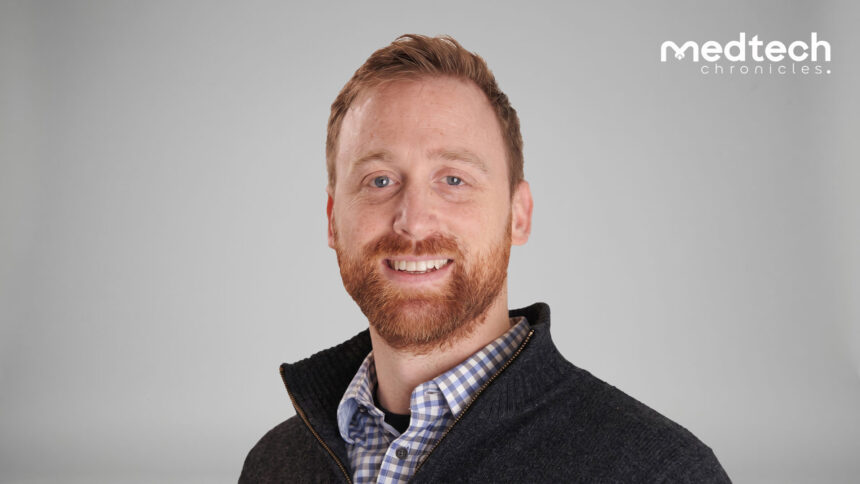
The standard timeline from initial symptom onset to a clear clinical diagnosis has historically stretched between two and three years. During this crucial window, patients and their caregivers navigated uncertainty, while physicians lacked fast, objective, and accessible diagnostic tools. Recognizing that early detection can fundamentally alter the trajectory of brain aging, a new movement in digital health emerged to bring cognitive assessment directly into the primary care exam room. At the forefront of this transformation is Boston-based Linus Health, led by co-founder and CEO David Bates, PhD. By combining advanced data science, artificial intelligence, and clinical neuroscience, the company is turning what was once a lengthy, specialized diagnostic ordeal into a rapid, routine part of everyday healthcare.
The Hidden Crisis in Early Cognitive Screening
For generations, evaluating cognitive health relied almost entirely on analog, paper-and-pencil tests designed decades ago. While these tools provided useful baselines in specialized memory clinics, they suffered from significant structural limitations when deployed in fast-paced primary care environments. Traditional assessments were often time-consuming to administer, subject to scorer bias, and insensitive to the earliest micro-changes in brain function. Primary care physicians, who serve as the first line of defense for aging Americans, were trapped in a reactive paradigm. They were forced to wait for patients or family members to voice explicit concerns before initiating a diagnostic workup, losing precious time when lifestyle modifications, therapeutic trials, and clinical management strategies could have had the greatest impact.
Beyond administrative friction, traditional cognitive tests provided only a snapshot of a patient’s final answer rather than capturing the process of how they reached that answer. For example, when a patient draws a clock during a standard cognitive test, a human evaluator sees only the finished picture on the sheet. What remains hidden are the subtle hesitations, motor tremor fluctuations, spatial planning corrections, and processing speeds that occur second by second while the pen touches paper. These subtle behavioral nuances, known as digital biomarkers, contain vital clues about underlying neurological health long before outward memory loss becomes obvious. The inability to capture these continuous dynamic signals left a vast diagnostic gap in American medicine, allowing brain diseases to progress in the dark.
A Multidisciplinary Pioneer at the Helm
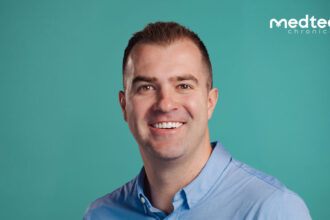
Bridging the gap between complex biotechnology and practical medical delivery requires a leader who operates at the intersection of multiple scientific disciplines. David Bates, PhD, brings a unique blend of training as a scientist, engineer, inventor, entrepreneur, and venture investor. Before founding Linus Health, his professional journey spanned academic medical centers, venture capital firms, and technology startups. He completed his Bachelor of Science and Master of Science degrees in Applied Biology and Biochemistry at the Georgia Institute of Technology, followed by a Doctorate in Chemical and Materials Engineering from the University of Auckland.
Dr. Bates sharpened his understanding of clinical commercialization and strategic leadership through positions at top institutions including Harvard Medical School, Massachusetts General Hospital, Morningside Ventures, and Tamarisc Ventures. His experience across academic research labs and investment boardrooms gave him a ground-level view of how medical breakthroughs often fail to reach everyday patients due to operational complexity. Rather than viewing medical devices purely through an academic lens, Dr. Bates developed a reputation for focusing on scalable, user-friendly execution that seamlessly integrates into existing healthcare workflows. His deep technical grounding in materials, cellular mechanisms, and digital system design provided the foundation for building a platform capable of processing complex multimodal health signals in real time.
Curiosity, Connection, and a Mission for Human Health
Growing up in a semi-rural area near Atlanta, Georgia, alongside three brothers, Dr. Bates developed an early fascination with how complex systems operate. He spent much of his childhood outdoors, building physical structures, exploring nature, and dismantling objects to understand their internal mechanics. This innate curiosity naturally steered him toward engineering and biological sciences, where he sought to apply structural problem-solving to human health challenges. However, his personal philosophy regarding medical innovation took a decisive turn through a series of chance encounters with leading figures in brain research.
A pivotal moment occurred during a meeting with world-renowned cognitive neurologist Dr. Alvaro Pascual-Leone, a professor at Harvard Medical School. During their conversation, Dr. Pascual-Leone emphasized that modern medicine too often focuses on diagnosing abstract disease labels rather than understanding the individual human sitting in the clinic. He noted that diseases do not walk down the street; people do, each with unique functional goals, personal values, and daily routines. Around the same time, discussions with Dr. Rhoda Au of Boston University highlighted the untapped potential of capturing passive digital behavioral markers to detect cognitive shifts years before severe decline takes root. These conversations illuminated a compelling realization for Dr. Bates: by combining low-friction digital capture with personalized clinical insight, it was possible to create a platform that treats brain health as a lifelong, proactive journey rather than a late-stage crisis.
Translating Cutting-Edge Neuroscience into Daily Care
With a clear vision in place, Dr. Bates co-founded Linus Health in Boston alongside Dr. Pascual-Leone, establishing an organization dedicated to modernizing brain health assessment. The cornerstone of the company’s early technology roadmap was the acquisition of Digital Cognition Technologies in 2020, which brought the groundbreaking DCTclock into the Linus Health portfolio. The DCTclock transformed the traditional paper-and-pencil clock drawing exercise into a digital assessment performed on a tablet with a digital stylus. Listed as an FDA Class II medical device, the technology uses advanced machine learning algorithms to evaluate over 100 subtle dynamic parameters, such as drawing velocity, pause times, spatial reasoning, and micro-hesitations- while the patient draws.
Under Dr. Bates’ executive direction, Linus Health expanded this single assessment into a broad, multimodal brain health platform. The digital platform evaluates not only cognitive speed and executive function, but also incorporates motor assessments, speech analysis, and clinical decision support for healthcare providers. Instead of producing cryptic technical scores, the system instantly generates actionable clinical recommendations for doctors and tailored lifestyle intervention plans for patients. By automating complex scoring processes, the platform allows primary care clinicians to complete comprehensive cognitive screenings in just a few minutes during routine patient visits, replacing months of waiting with immediate clarity.
Overcoming Skepticism and Scaling Clinical Impact
Scaling a novel medical technology within the American healthcare ecosystem presents significant regulatory, operational, and cultural hurdles. Historically, primary care practices have been hesitant to adopt new screening tools if they add extra time to busy daily schedules or create clinical uncertainty regarding next steps. To overcome these adoption barriers, Dr. Bates prioritized workflow efficiency above all else. He led the team to design a platform that integrates directly into existing Electronic Health Record systems, ensuring that screening results and care pathways flow effortlessly into standard clinical documentation.
This commitment to practical design paid off as healthcare systems across the nation began recognizing the strategic value of establishing dedicated brain health service lines. Backed by over $55 million in Series B financing from prominent healthcare investors, Linus Health expanded its footprint across primary care networks, specialized neurology clinics, and clinical research institutions. The company’s digital tools have been integrated into large-scale research studies and clinical trials, helping pharmaceutical partners streamline participant recruitment and monitor therapeutic responses with greater precision. By demonstrating both clinical accuracy and financial viability for health systems, Dr. Bates steered Linus Health from a promising Boston startup into a major force in national preventative care.
Bridging Biomarkers, AI, and Personalized Medicine
What sets Linus Health apart in the rapidly evolving digital health landscape is its comprehensive approach to multimodal precision care. Dr. Bates has championed an architecture that moves far beyond isolated cognitive scores. By synthesizing dynamic digital biomarkers with clinical history and blood-based biomarker data, such as emerging pTau-217 blood tests for Alzheimer’s risk, the Linus Health platform provides a complete 360-degree picture of an individual’s cognitive footprint. This multi-layered data model allows primary care physicians to distinguish between temporary cognitive changes caused by medication or sleep issues and progressive neurodegenerative conditions.
Central to Dr. Bates’ vision is the belief that diagnostic insights are only as valuable as the care plans they inspire. Once a patient’s risk profile is identified, the platform automatically generates evidence-based recommendations tailored to the individual. These recommendations address key modifiable risk factors, including cardiovascular health, physical exercise, sleep hygiene, social engagement, and nutritional optimization. By making brain health actionable, measurable, and personalized, the platform empowers patients to take an active role in protecting their cognitive vitality throughout their senior years.
Fostering Cross-Disciplinary Collaboration and Empathy
As Chief Executive Officer, Dr. Bates maintains a leadership philosophy rooted in humility, cross-disciplinary alignment, and mission-driven execution. Building a transformative healthcare platform requires unifying professionals who often speak very different languages: neuroscientists, data scientists, software engineers, primary care doctors, and regulatory specialists. Dr. Bates fosters a culture where scientific rigor meets human-centered design, ensuring that technical sophistication never compromises ease of use for elderly patients or busy clinic staff.
Colleagues describe his management approach as open, transparent, and grounded in real-world feedback. He encourages teams to listen intently to clinical end-users, frequently iterating on product software based on direct observation in medical offices. Rather than driving growth purely through aggressive commercial targets, Dr. Bates anchors every corporate goal in patient outcomes. By keeping the organization focused on treating people rather than isolated disease statistics, he has cultivated an environment where top-tier talent from technology and healthcare sectors collaborate with shared purpose.
Redefining the Standard of Brain Care Across America
Looking to the future, Dr. Bates envisions a world where cognitive health assessments are as routine and stigma-free as getting a routine vision or blood pressure check. As novel disease-modifying therapies for Alzheimer’s disease become available in the United States, early detection will be paramount to identifying candidates who can benefit most from treatment before irreversible brain damage occurs. Linus Health is uniquely positioned to serve as the nationwide infrastructure that connects early screening in local communities with specialized therapeutic care.
Through continuous investment in artificial intelligence, expanding clinical partnerships, and ongoing validation studies, Dr. Bates is guiding Linus Health toward a future where age-related cognitive decline can be caught early, mitigated effectively, and managed with dignity. His journey from an inquisitive child building things in Georgia to a pioneering executive in Boston underscores the power of combining technical expertise with genuine empathy. By turning complex neurological signals into clear, actionable care, Dr. Bates and Linus Health are changing how American medicine protects our most precious human asset: our mind.
At Medtech Chronicles, stories like that of Dr. David Bates and Linus Health serve as a powerful reminder of how thoughtful engineering and clinical neuroscience can converge to rewrite healthcare outcomes. As digital health continues to mature from novelty to necessity, highlighting the leaders and technology transforming quiet epidemics into stories of early intervention remains central to our coverage of the evolving medical landscape.