


A massive shift is rewriting the rules of global medicine. High-tech healthcare is rapidly moving away from specialized, standalone hospital hardware and moving directly into everyday consumer software. At the forefront of this movement is an innovation that turns an ordinary smartphone into a clinical-grade heart monitor. By using the basic camera lens already built into billions of mobile devices, people can now intercept silent, dangerous cardiac irregularities right from their living rooms. This breakthrough is completely redefining preventative cardiology, making medical-grade health monitoring as simple as checking a text message.
The Threat of Unseen Heart Flutters
Intermittent heart rhythm abnormalities present a severe diagnostic challenge for modern healthcare networks. Atrial fibrillation, the most widespread type of irregular heartbeat, causes chaotic cardiac rhythms that drastically increase the long-term risk of blood clots, heart failure, and ischemic strokes. The core clinical problem is that these episodes are highly unpredictable and frequently show no outward physical symptoms. A patient might feel a dangerous flutter during a morning walk, but by the time they can contact a clinic, schedule an appointment, and sit down for an electrocardiogram (ECG), their heart rhythm has returned to normal.
Traditional diagnostic pathways are reactive, slow, and full of friction. When a doctor suspects a cardiac rhythm issue, they typically refer the patient to a specialist to be fitted with a traditional Holter monitor. This institutional approach creates major hurdles. Patients must wear adhesive chest electrodes and carry a hardwired recording pack for days or weeks. This setup disrupts daily routines, limits physical activity, and causes skin irritation, yet it can still easily miss the exact, unpredictable moments an irregular rhythm occurs.
Furthermore, managing, cleaning, and downloading data from these physical hardware fleets strains the budgets and administrative staff of local clinics. Most critically, the data gathered is entirely historical, meaning weeks can pass before a clinical team evaluates the telemetry, leaving high-risk individuals vulnerable during critical windows of preventative care.
A Scientist Rooted in Microelectronics
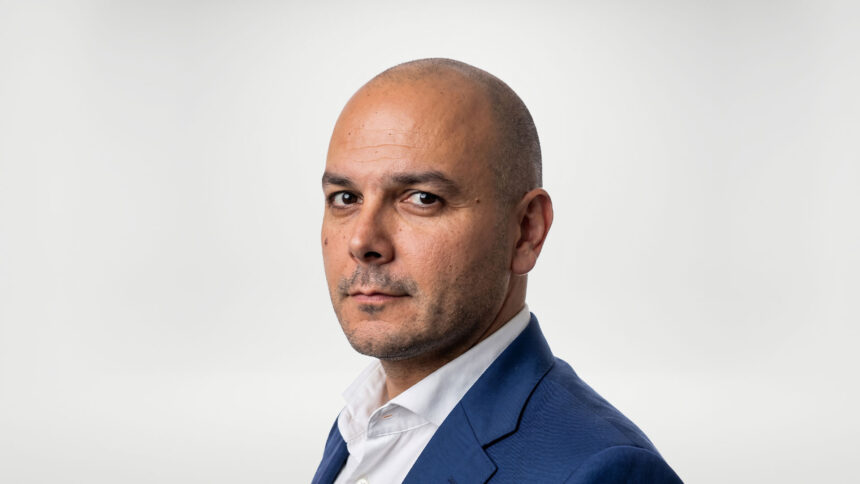
Bridging this gap required an executive with a specific combination of laboratory science, medical research, and hospital operational experience. Lars Grieten did not enter the digital health sector as a typical software entrepreneur looking for a quick startup launch. He built his professional foundation on rigorous academic research, nanotechnology, and bio-electronics. Grieten earned his Master of Science and subsequent Ph.D. in Biomedical Sciences at Hasselt University. His early doctoral work focused on advanced material sciences, specifically exploring how to develop synthetic diamond surface architectures for the label-free detection of organic proteins via electrochemical impedance spectroscopy.
Following his academic work, Grieten transitioned directly into frontline hospital environments to apply his research to systemic healthcare inefficiencies. He became a project manager for the Limburg Clinical Research Program at the East-Limburg Hospital, where he formally established the Future Health department. This entity was explicitly created to evaluate how mobile medical applications and remote monitoring could optimize real-world patient care paths.
Simultaneously, he deepened his corporate research credentials as a senior researcher in wearable health solutions at Imec, Europe’s largest independent research hub for microelectronics and digital technology. By combining these institutional roles with an ongoing position as a visiting professor in digital health at Hasselt University, Grieten possessed the cross-disciplinary training necessary to turn ordinary consumer electronics into fully regulated medical instruments.
The Personal Crisis That Changed Everything
While Grieten possessed the scientific tools to innovate, the definitive spark for his entrepreneurial journey was a sudden family emergency. While balancing his microelectronics work at Imec with hospital clinical trials, his own father suffered a severe, unexpected stroke. The underlying clinical cause was later diagnosed as atrial fibrillation. It was an intermittent rhythm disorder that could have been managed effectively with standard medical therapies, had there been a tool to catch the warning signs early.
Witnessing the intense physical and emotional toll of a preventable stroke permanently changed Grieten’s professional path. He realized that advanced biometric algorithms trapped inside elite laboratories were useless if ordinary families could not access them during critical moments. The primary problem facing healthcare was not a lack of diagnostic capabilities; it was a delivery problem.
Driven by a deep personal motivation to ensure other families would not experience a preventable tragedy due to a lack of immediate, accessible data, Grieten pivoted away from purely theoretical research to build a company focused on consumer-accessible cardiac health monitoring.
Building a Hardware-Free Diagnostic Tool
In August 2014, Lars Grieten formally co-founded Qompium in Hasselt, Belgium, alongside key partners Bieke Van Gorp and Jo Van Der Auwera. The baseline objective of the startup was considered highly disruptive: the executive team aimed to completely bypass external consumer health hardware by turning the ordinary smartphone into an internationally certified, clinical-grade heart monitor.
The core technology powering their main software platform, FibriCheck, relies on photoplethysmography (PPG). To utilize the system, a patient opens the application and places their index finger firmly over the smartphone’s rear camera lens for sixty seconds. The camera sensor measures microscopic variations in light absorption caused by blood pulsing through the small capillaries of the skin with every heartbeat.
FibriCheck’s cloud-based artificial intelligence models analyze these raw pulse waveforms to flag heart rate variations and potential arrhythmias with clinical accuracy. By utilizing the native optical components already built into consumer electronics, Grieten created a highly scalable software-as-a-medical-device architecture capable of running across more than 11,000 distinct smartphone models and major consumer wearables.
Confronting the Barriers of Medical Regulation
Building a standard mobile application is simple, but guiding a software-only diagnostic tool through the strict pathways of global healthcare compliance is an incredible corporate challenge. In the early stages of Qompium, Grieten and his leadership team faced heavy skepticism from conservative medical organizations and international regulatory bodies who were hesitant to trust an application that relied on consumer cameras for serious cardiac analysis.
To overcome this resistance, Grieten implemented a corporate strategy of absolute clinical validation. He refused to cut corners, subjecting the FibriCheck platform to intensive clinical evaluations that ultimately generated backing from over 70 peer-reviewed scientific publications. Major multicenter clinical trials highlighted the platform’s high performance, proving its diagnostic sensitivity and specificity in detecting atrial fibrillation across various popular smartphone models. This unwavering dedication to clinical proof allowed Qompium to secure a series of major regulatory achievements, expanding its platform into a globally trusted medical device:
- CE Class IIa Certification: Earning early official medical device clearance across the European Union.
- FDA Clearance: Successfully penetrating the highly regulated United States commercial healthcare market, achieving an industry milestone as a software-only application cleared with equivalence to traditional electrocardiograms.
- International Registrations: Securing official medical device status in the United Kingdom, Australia, Singapore, and Hong Kong.
- Institutional Funding Capital: Raising over $12.6 million in total capital, backed by prominent health tech investors and networks like LRM, JLABS, the AgeTech Collaborative from AARP, and the EIT Health network.
Today, FibriCheck has amassed millions of monitoring days and is actively trusted by over 1.2 million registered users worldwide.
Deep Data and Public Health Economics
Grieten’s business expertise stretches far beyond basic application deployment. He recognized early on that a digital health platform can only achieve massive global scale if it integrates directly into regional public health economics and strict cloud data security standards. Under his strategic guidance, FibriCheck’s advanced machine learning models have been systematically trained on an immense repository of more than 15 million annotated heart rhythm datasets, ensuring top-tier diagnostic accuracy that rivals legacy hardware.
To support this large-scale data operation, Qompium engineered a secondary, highly specialized internal cloud infrastructure unit called Extra Horizon. This dedicated platform provides a pre-configured, medical-grade, fully compliant cloud infrastructure built specifically to help other digital health innovators bring their own medical software applications to market without getting stuck in regulatory architecture traps. Additionally, Grieten has been a fierce champion for weaving mobile health solutions directly into existing public and private insurance reimbursement models.
By collaborating with major European healthcare networks, FibriCheck has successfully become a fully reimbursable digital health prescription in multiple countries, allowing over 5 million people to have their digital heart monitoring costs covered. This structural integration ensures that practicing clinicians automatically receive clean, structured reports within their existing medical software, heavily optimizing real-world care paths.
A Balanced and Device-Agnostic Leadership Style
Lars Grieten’s approach as a co-founder and CEO is defined by a distinct mix of academic skepticism, deep patient empathy, and fast business execution. Because he maintains his active position as a visiting professor in digital health at Hasselt University, he approaches corporate strategy like a scientific paper, demanding verifiable data, clear key performance indicators, and absolute compliance before entering new healthcare markets.
He intentionally avoids managing his team from a distant, isolated corporate office. Grieten maintains a flat organizational structure within Qompium’s headquarters in Hasselt, Belgium, purposefully bringing software engineers, regulatory compliance officers, and frontline cardiologists together to work through product design hurdles. He continuously drives his development teams to maintain a strictly device-agnostic philosophy.
This approach ensures that a patient’s access to life-saving cardiac monitoring is never limited by the specific brand, ecosystem, or cost of their personal mobile hardware. This balance of rigorous science and human focus has allowed a compact team of exactly 27 employees to compete directly against multi-billion-dollar medical device giants across Europe and North America.
Democratizing Modern Digital Maturity
The broad shift toward decentralized, digital-first healthcare delivery is no longer a distant vision; it is an active operational reality among the world’s most sophisticated medical institutions. As highlighted in the document “The Vanguard of Medicine Inside the World’s Most Advanced Smart Hospitals_8.docx”, premier global health systems like the Mayo Clinic and the Cleveland Clinic are rapidly embedding automated diagnostics and massive machine learning models directly into daily clinical workflows to predict complex pathologies long before physical symptoms appear.
However, while these elite, multi-billion-dollar medical hubs possess the deep financial reserves to build massive data lakes and install advanced on-site quantum computing networks, smaller regional healthcare systems and remote communities frequently face immense financial and operational barriers when trying to adopt predictive intelligence tools. This is exactly where the broad impact of Lars Grieten’s work comes into play.
By packaging advanced, clinically validated artificial intelligence algorithms into a lightweight, software-only smartphone app, Qompium is effectively democratizing the core tenets of digital maturity seen in top smart hospitals. It pulls predictive cardiac care entirely out of isolated clinical institutions and delivers it directly into the homes of over 1.2 million users worldwide, bypassing traditional infrastructure limitations.
The Road Ahead for Decentralized Healthcare
The long-term trajectory of global healthcare is moving fast toward continuous, remote, and highly personalized home-based care. As Qompium continues to expand its international presence, Grieten is actively guiding the FibriCheck platform beyond basic, individual heart checks into comprehensive, continuous patient lifecycle monitoring. The ecosystem now features customizable monitoring rules and tailored care paths designed to help health systems manage large patient populations efficiently.
A prime example of this scaling strategy is FibriCheck’s recent partnership expansions, including its collaboration with U.K. private healthcare provider Benenden Health, which opens up smartphone-based heart checks to over 870,000 members. Additionally, their ongoing work with Inhealthcare focuses on deploying hospital-grade monitoring directly into patients’ homes through National Health Service virtual ward pathways. Through his continuous efforts to transform a basic consumer smartphone camera lens into a highly advanced, medical-grade diagnostic terminal, Lars Grieten is actively rewriting the rules of preventative cardiology, saving lives one heartbeat at a time.