
You go in for a routine blood draw. Nothing dramatic, maybe it’s a checkup, maybe your doctor’s just being thorough. But somewhere in a lab, that single vial might now be screened for cancer-related mutations, genetic risk markers, and biomarkers that didn’t even have names a decade ago. That’s the reality of advanced diagnostic technologies today: they’re not just faster versions of old tests. They’re a fundamentally different way of looking at the human body.
And it’s happening fast. Nearly 17,000 laboratory professionals showed up at the ADLM Annual Scientific Meeting in Anaheim this past July, comparing notes on everything from cancer screening to space medicine diagnostics. Across five days, the event highlighted advances in diagnostic research and technology addressing diabetes, space medicine, neurodegenerative disease, cancer screening, laboratory automation, and other areas of healthcare. That’s not a niche gathering. That’s an industry in motion.
What Are Advanced Diagnostic Technologies, Exactly?
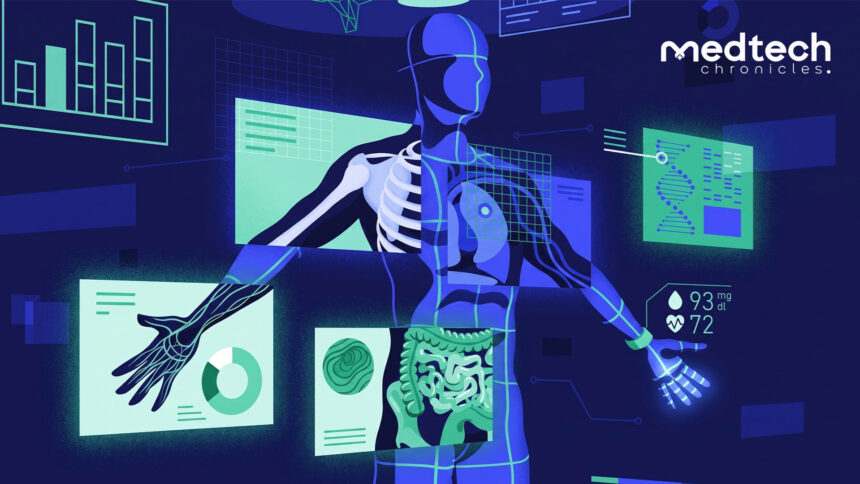
Advanced diagnostic technologies are tools that go beyond traditional testing methods, X-rays, basic blood panels, physical exams- to detect disease earlier, with more precision, and often with far less invasiveness. Think genomic sequencing, AI-assisted imaging, liquid biopsies, and portable point-of-care devices that can run lab-quality tests outside a lab.
The shift isn’t subtle. Reactive treatment, waiting for symptoms, then chasing a diagnosis, currently consumes over 75% of healthcare spending in the U.S. That number alone explains why so much investment is pouring into catching disease before it announces itself.
How Is AI Changing Diagnostics?
AI is helping clinicians read scans faster and catch patterns the human eye tends to miss, especially in radiology, where machine learning models now assist with everything from routine X-rays to complex oncology imaging, freeing up specialists for the harder cases.
That last part matters more than it sounds. It’s not really about replacing radiologists; it’s about triage. One major imaging company puts it simply: their AI platforms now let radiologists read multiple imaging types at once and generate structured reports automatically, which frees up specialists to spend more time on the genuinely complex cases. Its AI platforms make multi-modal reading and structured reporting possible, so radiologists can spend more time on complex cases. That framing, AI handling volume, humans handling nuance, shows up again and again across the industry right now.
From Reading Scans to Reading Patterns Humans Miss
Here’s the part that’s easy to overlook: AI isn’t just faster at the same job. It’s starting to notice things radiologists were never trained to look for, subtle texture changes in tissue, faint correlations across thousands of prior scans, patterns that only emerge at scale. One area gaining real traction is the pairing of AI modeling with structural biology, a discipline that examines the three-dimensional structures of biological macromolecules such as proteins, nucleic acids, and lipids to understand their function, a field that used to live almost entirely in pharmaceutical research labs. Now it’s edging into mainstream diagnostics.
The Blood Test That Finds Cancer Before You Feel Sick
If there’s one technology that captures where diagnostics is headed, it’s liquid biopsy. No surgery, no biopsy needle, no waiting weeks for pathology. Just blood.
What Is a Liquid Biopsy?
A liquid biopsy is a noninvasive blood test that detects cancer-related genetic mutations and biomarkers circulating in the bloodstream, catching signs of disease that would otherwise require invasive tissue sampling. It’s already used for monitoring certain cancers and is being expanded toward earlier detection.
The bigger ambition is multicancer detection: a single test screening for signals from multiple cancer types at once. It’s a big idea, and companies have bet heavily on it. But it’s not quite ready for prime time. None of these tests currently carry FDA approval; the ones on the market today operate as lab-developed tests instead. While no FDA-approved tests exist, some MCD tests are available as lab-developed tests. And there are real hurdles ahead: reimbursement, and frankly, the infrastructure to actually follow up when a test flags something. Finding a signal is one thing. Knowing what to do next is another. Fierce Healthcare
Diagnostics Are Leaving the Lab
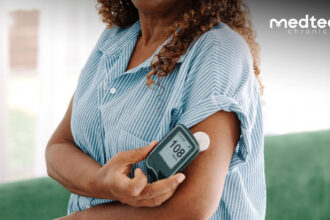
Not every advanced diagnostic tool needs a hospital wing around it anymore. Portable devices are showing up in urgent care centers, ERs, even community clinics, running tests that used to require sending a sample off and waiting.
Rapid molecular tests for infectious diseases, portable blood analyzers, and handheld imaging tools illustrate how diagnostics are becoming more decentralized. Some of this technology is almost absurdly compact. Microfluidic technologies, for instance, can conduct multiple complex tests on a single drop of blood, no vial required, no lab tech drawing from your arm.
For rural clinics or understaffed ERs, that’s not a luxury upgrade. That’s the difference between catching something today and catching it three days from now.
The Catch Nobody Puts in the Brochure
So why isn’t every hospital already running on this stuff? Cost, mostly. And complexity.
Genomic sequencing produces enormous amounts of data, and someone has to interpret it, which takes specialized training most clinics don’t have on staff. Add in data privacy concerns (remote diagnostics means patient data moving across networks, not staying in one building) and you’ve got a real bottleneck between “the technology exists” and “your local clinic can use it.”
There’s also a quieter tension in the room. AI capabilities are advancing at a pace that’s honestly hard to keep up with, and the industry knows it needs to stop chasing hypothetical use cases and start deploying things that actually help patients today, not five years from now.
Where Advanced Diagnostic Technologies Go From Here
The honest version of this story isn’t “everything is solved.” It’s that advanced diagnostic technologies are shifting medicine from a reactive model, wait then treat, toward something closer to early warning. Liquid biopsies, AI-assisted imaging, point-of-care testing, genomic profiling: none of these are science fiction anymore. They’re sitting in labs and clinics right now, at various stages of “promising” and “actually working.”
What happens next depends less on the science and more on the boring stuff: reimbursement policy, infrastructure, training. The tools are arriving faster than the systems built to use them. That gap is where the real story is.